
If you’ve ever flipped over a product label and immediately regretted it… you’re not alone.
During my clean living journey, I realized a lot of the everyday products in our homes—cleaning sprays, cookware, personal care products, even food storage containers—contain chemicals that aren’t doing our bodies any favors.
Cue the late-night Google spiral.
Suddenly I was learning about things like endocrine disruptors, PFAS, and mystery fragrance chemicals… while side-eyeing literally everything in my house.
But here’s the good news:
Creating a low-tox home doesn’t mean throwing everything away overnight or becoming a DIY homesteader who churns their own butter (unless you want to… in which case, respect 👊).
Instead, it’s about making simple non-toxic swaps over time.
Small changes that reduce your exposure to unnecessary chemicals—without turning life into a stressful science experiment.
In this guide we’ll cover:
→ common toxins found in everyday products
→ how to choose safer alternatives
→ materials that are generally considered safer
→ tools to help you find cleaner products
→ ways to make non-toxic swaps without blowing your budget
I’ll also link to detailed guides with actual clean living swaps for every area of your home so you don’t have to research everything yourself.
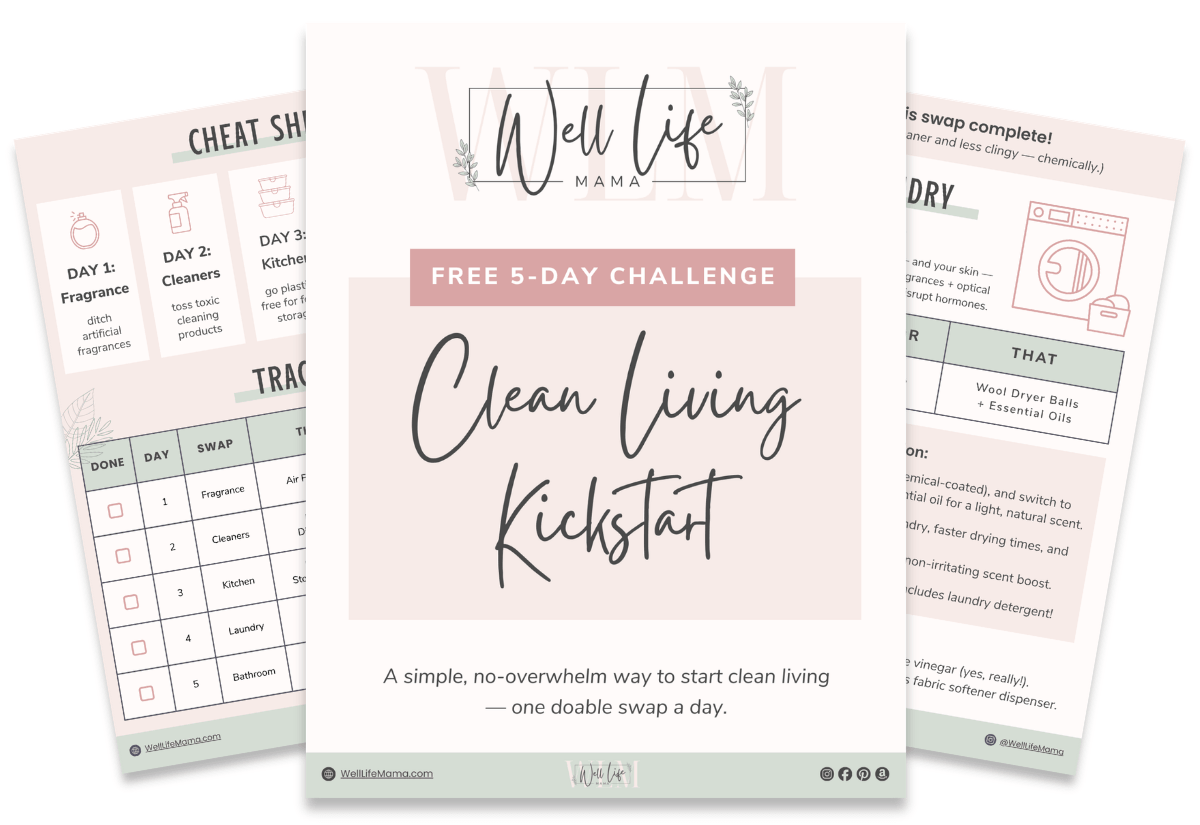
And If you want a super simple place to start, I created a free 5-Day Clean Living Kickstart that walks you through five easy swaps you can make.
Medical Disclaimer: This post is for educational purposes only and is not medical advice. I’m not a healthcare professional, and nothing here is a substitute for guidance from your provider. Always consult a qualified professional before making changes to your health, supplements, or lifestyle. Please see the full disclaimer for more details.
Affiliate Disclosure: This post may contain affiliate links or links to Amazon. If you choose to purchase anything through these links, I may earn a commission at no cost to you. As an Amazon Associate, I earn from qualifying purchases. Thank you so much for your support, you’re the best! See the full disclosure for details.
What “Non-Toxic Swaps” Actually Means
First things first: let’s demystify the phrase clean living.
Because if the internet had its way, you’d think you need to replace your entire house, buy only handmade products from the forest, and make your own sourdough bread before breakfast.
That’s… not necessary.
Non-toxic swaps simply mean replacing products that may contain harmful ingredients with safer alternatives when possible.
That might look like:
- swapping plastic food storage for glass
- choosing fragrance-free cleaning products
- replacing non-stick cookware
- using safer personal care products
You don’t need to do everything at once.
In fact, the easiest way to approach clean living is by focusing on one small change at a time.
Want an Easy Place to Start?
If you’re new to clean living, figuring out which swaps actually matter can feel overwhelming.
That’s why I created a free 5-Day Clean Living Kickstart that walks you through 5 simple swaps to reduce toxins in your home without hours of research.
✔ quick wins
✔ beginner-friendly swaps
✔ no overwhelm
Common Toxic Offenders Found in Household Products
Many conventional household products contain chemicals that have been linked to hormone disruption, respiratory irritation, and other health concerns.
Here are some of the most common ingredients people try to reduce in a low-tox home.
Artificial Fragrance
Artificial fragrance is one of the biggest toxin sources in modern homes.
Companies can legally list hundreds of undisclosed chemicals under the single word fragrance.
These chemicals can include carcinogens like phthalates, formaldehyde, and volatile organic compounds (VOCs) and are often linked to:
- hormone disruption
- headaches and migraines
- allergies and asthma
- skin irritation
They commonly show up in:
- candles
- air fresheners
- laundry detergent
- dryer sheets
- cleaning products
- perfumes
- skincare products
“Tropical breeze” might sound lovely… until you realize it probably contains 200 mystery chemicals.
Phthalates
Phthalates are chemicals used to make plastics flexible and help fragrances last longer. They’ve been linked to:
- endocrine disruption
- reproductive issues, including infertility and increased risk of miscarriage
- gestational diabetes, risk of preterm birth, and birth defects
- developmental issues, autism spectral disorder, and childhood behavioral problems
- cancers, including breast cancer and a higher incidence of childhood cancers
- Other health issues like diabetes and asthma
Phthalates commonly appear in:
- fragranced products
- vinyl products
- plastics
- cosmetics
- nail polish
Parabens
Parabens are preservatives used in many personal care products to prevent bacteria growth.
They have genotoxic and cytotoxic effects that harm reproductive health, can cause infertility, and increase the risk of cancer, especially breast cancer.
You’ll often find them in:
- lotion
- shampoo
- conditioner
- makeup
- skincare
PFAS (Non-Stick Chemicals)
PFAS (Per-and Polyfluoroalkyl Substances) are often called “forever chemicals” because they don’t break down easily in the environment or the human body… which is not the kind of forever most of us are going for.
PFAS can cause cancer, reproductive and immune system issues, and a variety of endocrine diseases.
They’re commonly used in products that are:
- non-stick
- stain-resistant
- water-resistant
You’ll often find them in:
- non-stick cookware
- stain-resistant furniture
- waterproof clothing
- food packaging
BPA & Plasticizers
Many plastics contain chemicals like BPA that can leach into food and drinks—especially when heated.
Common sources include:
- plastic food storage containers
- water bottles
- canned food linings
- plastic kitchen utensils
One of the easiest ways to reduce exposure is simply switching to glass or stainless steel food containers.
👉 You may also like: 5 Easy Ways to Start Reducing Your Toxin Build Up
At this point you might be thinking:
“Great… so basically everything in my house is toxic?”
Take a deep breath.
The goal of clean living isn’t to panic-purge your entire home or feel like you’ve been doing everything wrong.
Most of us grew up using these products because we didn’t know any better. But now that we do, we can simply start making better choices going forward.
Small clean living swaps over time can make a big difference!
How To Choose Non-Toxic Swaps (Without Losing Your Mind)
When I first started learning about toxins in household products, I made a classic clean living beginner mistake:
I tried to research every single ingredient in every product I owned.
This lasted approximately three hours before my brain melted. 🫠
If you’ve ever tried to research clean living products, you know how overwhelming it can be to suddenly realize pretty much everything in your life is toxic.
Suddenly your frying pan is suspicious.
Your laundry detergent is questionable.
And even your couch might be plotting against you.
Take a deep breath.
You do not need to become a full-time ingredient detective to start low tox living.
The easiest way to approach non-toxic swaps is by following a few simple guidelines that help you spot better products without spending hours researching every ingredient.
Think of these as your low-tox shopping cheat codes.
1. Look for Ingredient Transparency
A good rule of thumb: brands that are proud of their ingredients usually list them clearly.
If a company hides ingredients behind vague terms like:
- fragrance, perfume, or parfum
- proprietary blend
- scent technology
…that’s a red flag. The company doesn’t want to tell you what’s actually inside.
Not exactly reassuring.Truly clean brands tend to be very transparent about their ingredients, because they know customers care about what they’re using and putting in their homes.
2. Skip Synthetic Fragrance
If you only change one thing in your home, make it this.
Artificial fragrance can hide hundreds of undisclosed chemicals under a single word on an ingredient label.
And it shows up everywhere:
- candles
- air fresheners
- laundry detergent
- cleaning products
- trash bags
- skincare
- feminine care
- perfumes
This one swap alone can dramatically reduce chemical exposure in your home.
Instead, look for products that are:
- fragrance-free (skip “unscented” as it can contain masking agents to cover up fragrance)
- scented with pure essential oils
Honestly, sometimes no scent is the best scent. You’ll get used to the fresh scent of… nothing.
👉 You may also like: 21 Clean Living Benefits You’ll Actually Notice in Real Life
3. Choose Safer Materials
For household items, materials matter just as much as ingredients.
Some materials are simply more stable and less likely to leach chemicals over time.
When possible, look for things made from:
- glass
- stainless steel
- cast iron
- ceramic
- wood
- silicone
These materials also tend to last longer, which means fewer replacements (and less waste… score!).
4. Start With High-Impact Non-Toxic Swaps
Trying to replace everything at once is the fastest way to get overwhelmed and burn out.
Instead, prioritize products that:
- come in contact with your food
- touch your skin
- affect the air you breathe
These clean living swaps tend to have the biggest impact on daily chemical exposure.
Examples include:
- cookware
- food storage containers
- cleaning products
- laundry detergent
- personal care items
5. Aim for Progress—Not Perfection
Here’s something the internet doesn’t always say out loud:
A completely toxin-free home is pretty much impossible.
And that’s okay.
Clean living isn’t about throwing everything away and starting over. It’s about reducing exposure where and when it makes sense.
You can replace products when:
- they run out
- they break
- you find a clearly better alternative
- your budget allows
Over time, small non-toxic swaps add up to a much healthier home that’s significantly lower in toxins.
If you want help figuring out where to start, my 5-Day Clean Living Kickstart walks you through five easy beginner swaps.
Safer Materials to Look For in Non-Toxic Swaps
When replacing household items with non-toxic home swaps, these materials are generally considered safer alternatives:
Kitchen & Food Storage
- glass
- stainless steel
- cast iron
- silicone
- wood
Home & Textiles
- cotton
- wool
- linen
Cleaning Tools
- glass spray bottles
- wooden brushes
- plant-based sponges
- bleach-free paper towels
Personal & Feminine Care
- plant-based toothbrush bristles
- bleach-free toilet paper
- organic cotton feminine products
👉 You may also like: Ways to Save Money on Clean Living
Tools for Finding Non-Toxic Products
One of the hardest parts of clean living is figuring out which products are actually safe.
Thankfully there are some tools that make this much easier.
EWG (Environmental Working Group)
The EWG offers several databases that evaluate ingredient safety.
Helpful tools include:
- Skin Deep Database — ratings for cosmetics and personal care products broken down by ingredients (on a scale of 1-10 with 10 being the worst and EWG VERIFIED™ being the best)
- Build Your Own Report — copy and paste ingredients when you can’t find a specific product in the Skin Deep Database
- Healthy Cleaning Guide — search ratings for more than 2,500 cleaning products
- Food Scores — ratings for specific food products and ingredients
- Dirty Dozen — a list of the 12 non-organic fruits and vegetables that are most contaminated with the highest amounts of harmful pesticide residue
- Clean 15 — lists the 15 non-organic fruits and vegetables that are least contaminated with harmful pesticides
- Tap Water Database — search for your water provider and see the contaminants in your drinking water (warning: your results may be scary!)
Want a shortcut?
I’ve gathered my go-to low-tox essentials and non-toxic swaps on Amazon so you don’t have to go down a 47-tab research spiral.
👉 Shop my Amazon Picks here
Apps
- Think Dirty App — scan product barcodes for personal care items while shopping to see ingredient safety ratings.
- Yuka App — scans both food and personal care products and evaluates ingredient safety.
Branch Basics Blog
The Branch Basics blog is one of the best resources for learning about toxins in household products and finding safer alternatives.
Ways to Save Money on Non-Toxic Swaps
One of the biggest myths about clean living swaps is that everything has to be expensive.
Sure, some products cost more upfront—but you definitely don’t have to replace your entire house overnight (your bank account will hate you).
The secret is making non-toxic swaps gradually, strategically and affordably.
Here are a few simple ways to keep clean living budget-friendly:
- Replace products as they run out instead of tossing everything at once
- Focus on high-impact swaps first (things that touch food, skin, or air)
- Choose higher-quality items that last longer
- Look for multi-purpose products that replace several items
- Watch for sales or bundles

And the good news? There are actually quite a few ways to save money on non-toxic products if you know where to look.
I’ve tracked down the best discounts, rewards programs, referral codes, and cash-back opportunities for many popular clean living brands.
In fact… there are so many ways to save on low tox living that I ended up writing an entire post about them!
👉 Before you buy anything, check out my guide:
15 Ways to Save Money on Non-Toxic Items for Healthy Clean Living
And while you’re at it, take a peek at my clean living Discounts page, where I keep a list of deals and promo codes for some of my favorite clean living products!
Because creating a healthier home should feel empowering… not financially traumatic.
5 Easy Swaps To Start Clean Living
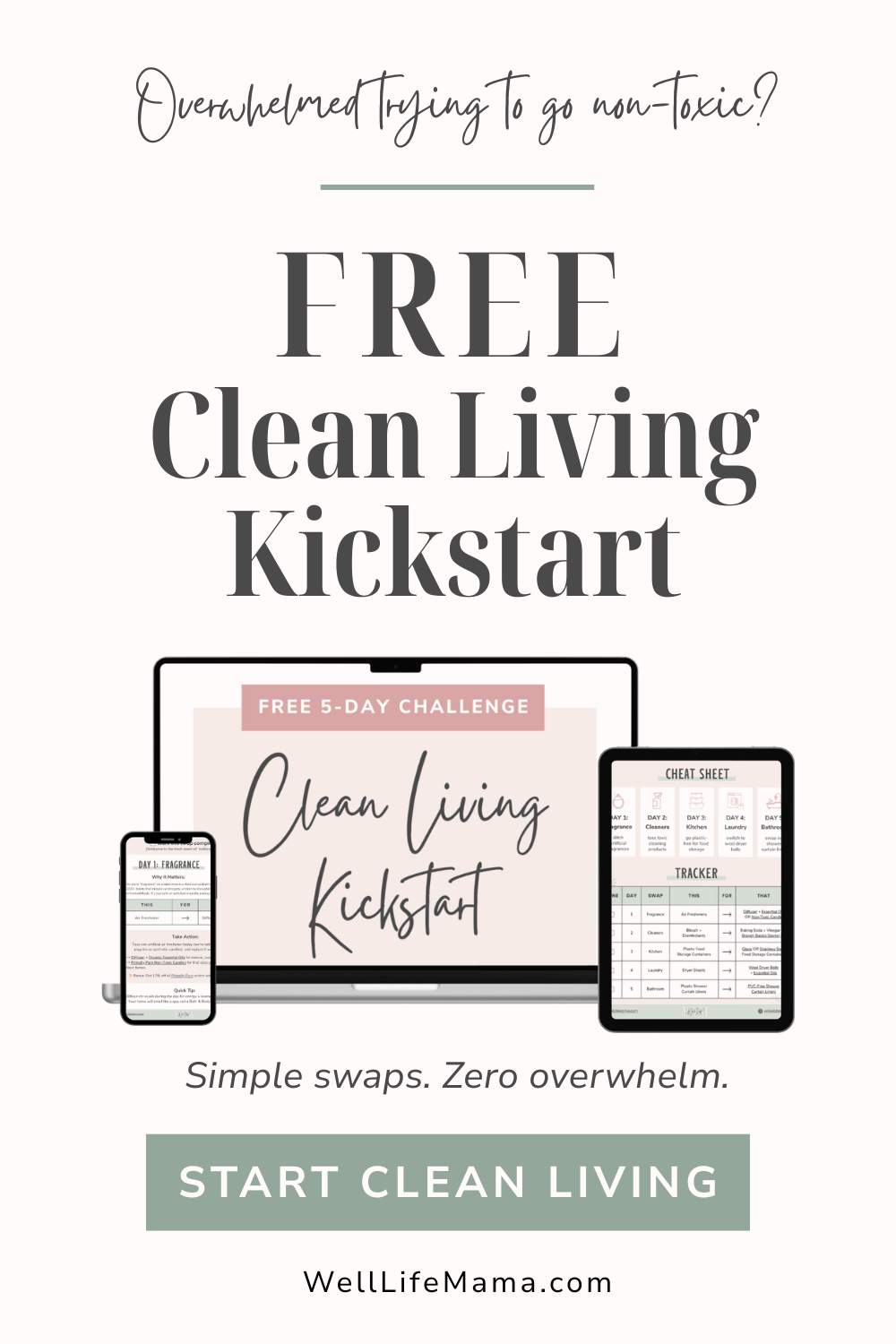
Overwhelmed by labels, toxins, and where to even begin? This FREE 5-Day Clean Living Kickstart shows you how to start clean living with simple swaps—no extremes, no stress, no pressure to be perfect.
Non-Toxic Swaps by Category
If you’re looking at this list and thinking:
“Okay… but where do I even start?”
You’re not alone.
Trying to detox your whole house at once can feel like opening Pandora’s box of ingredient labels.
Creating a lower-toxin home isn’t something most people do in a weekend.
In reality, most clean living journeys look more like this:
- swap a few things in the kitchen
- replace a cleaner when it runs out
- slowly upgrade products over time
Little by little, your home can become low-tox and healthier without turning your life upside down.
The easiest approach is to tackle one swaps category at a time.
Below are helpful clean living guides that break down the best non-toxic swaps for how to remove toxins in different areas of your home and life.
That way, you can focus on a few simple changes instead of having to research and replace everything all at once.
👉 You may also like: GIFT GUIDE: The Best Non-Toxic Wellness Gifts for Health Junkies They’ll Actually Want
Kitchen Non-Toxic Swaps
Your kitchen is one of the most important places to reduce toxin exposure since so many products come into direct contact with your food and what you eat daily.
👉 Read the full guide: Non-Toxic Kitchen Swaps
Pantry Non-Toxic Swaps
What’s inside your pantry matters just as much as how you cook it. These simple swaps help reduce hidden ingredients and upgrade your everyday staples.
👉 Read the full guide: Non-Toxic Pantry Swaps
Home Non-Toxic Swaps
From cleaning products to laundry and air quality, these home swaps help reduce everyday toxin exposure where you live, sleep, and breathe.
👉 Read the full guide: Non-Toxic Home Swaps

Personal Care Non-Toxic Swaps
From skincare to makeup and daily essentials, these swaps focus on the products that come into closest contact with your skin.
👉Read the full guide: Non-Toxic Personal Care Swaps
Pregnancy Non-Toxic Swaps
During pregnancy, reducing toxin exposure matters even more. These swaps support your body (and your baby) with safer, low-tox alternatives.
👉 Read the full guide: Non-Toxic Pregnancy Swaps

Baby Non-Toxic Swaps
Babies are more sensitive to environmental toxins, making simple, safer product swaps especially important in those early stages.
👉 Read the full guide: Non-Toxic Baby Swaps
Toddler Non-Toxic Swaps
Toddlers are constantly touching, exploring, and putting things in their mouths—these swaps help reduce exposure in their everyday environment.
👉 Read the full guide: Non-Toxic Toddler Swaps

Want an Easy Place to Start?
If you’re new to clean living, the hardest part is usually figuring out which non-toxic swaps actually matter most.
That’s exactly why I created the Free 5-Day Clean Living Kickstart.
It walks you through five simple swaps that significantly reduce toxins in your home — without overwhelm or expensive upgrades.
Each day focuses on one quick change you can make in just a few minutes.
Grab it here 👉 5-Day Clean Living Kickstart
👉 You may also like: How to Lose Weight Naturally (Without Diets, Drama, or Soul-Sucking Workouts)
FAQ: Non-Toxic Swaps
Still have questions about making non-toxic swaps or starting clean living? Here are answers to some of the most common questions about replacing toxic items and creating a low-tox lifestyle.
What are non-toxic swaps?
Non-toxic swaps are health-conscious replacements for everyday products that contain harmful chemicals. The goal is to choose safer alternatives that reduce your exposure to toxins.
What are the most important non-toxic swaps?
Many people start with high-impact swaps like cookware, food storage containers, cleaning products, and personal care items.
Items that touch food, touch skin, or affect indoor air quality tend to have the biggest impact on daily toxin exposure.
Do I need to replace everything in my home?
Not necessarily. Obviously, the more toxic items you can replace, the better. But the easiest and most affordable approach is replacing items gradually as they run out or wear out.
Over time, those small swaps add up to a home that’s significantly lower in toxins — without feeling overwhelming or too expensive.
How do I start clean living?
The easiest way to start a low-tox home is by focusing on a few high-impact non-toxic swaps first instead of trying to replace everything at once.
If you want a step-by-step starting point, I created a Free 5-Day Clean Living Kickstart that walks you through five beginner swaps that can significantly reduce toxins in your home.
Each day focuses on one simple change you can make without hours of research.
👉 Grab the Free 5-Day Clean Living Kickstart here.
Final Thoughts on How to Replace Toxic Items With Non-Toxic Swaps
Creating a healthier home doesn’t require perfection.
Making small non-toxic swaps over time can significantly reduce your exposure to unnecessary chemicals while still keeping life practical and realistic.
Start with one area of your home, replace products gradually, and focus on progress instead of perfection.
Over time, those small changes add up to a cleaner, healthier home.
👉 You may also like: My Journey to a Healthy Rainbow Baby: How I Healed My Body After Multiple Miscarriages + Got Pregnant Naturally
Start Here: The 5-Day Clean Living Kickstart
If you’re new to clean living, the hardest part is usually figuring out where to start with non-toxic swaps.
There are a lot of opinions online… and not all of them are realistic for busy families.
That’s exactly why I created the Free 5-Day Clean Living Kickstart.
Each day walks you through 5 beginner swaps that can significantly reduce toxins in your home — without spending hours researching products or replacing everything you own.
No overwhelm.
No complicated research.
No perfection pressure.
Just easy practical steps toward a healthier home.
👉 Download the Free 5-Day Clean Living Kickstart here
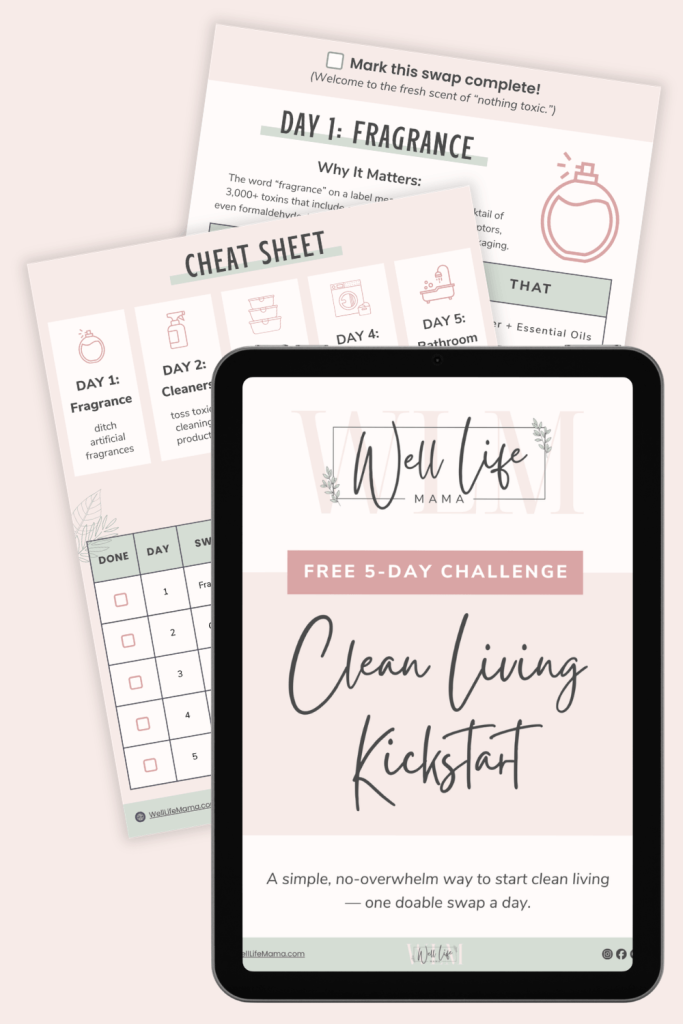
5 Days to a Cleaner, Low-Tox Home (Without the Overwhelm)
You don’t need to replace everything you own or go down an ingredient-research rabbit hole to start living cleaner.
This FREE 5-Day Clean Living Kickstart walks you through one simple swap a day—the kind that actually fits into real life (yes, even mama life).
No overwhelm. No perfection required. Just progress you can feel good about.




0 Comments