

If there’s one room in your house where toxins love to hang out, it’s the kitchen. Between nonstick cookware, plastic storage, and food packaging that reads like a chemistry exam, it’s easy to get exposed to chemicals every day.
The good news? Creating a low-tox kitchen doesn’t require a dramatic pantry purge or a weekend-long home detox. A few simple swaps can dramatically reduce the chemicals that come in contact with your food, your hands, and the air you breathe while cooking.
In this guide, we’ll walk through the most impactful non-toxic kitchen swaps so you can start creating a healthier, low-tox kitchen without feeling overwhelmed.
If you’re new to clean living, check out my Complete Guide to Non-Toxic Swaps for the full roadmap on replacing the biggest toxin sources in your home.
Medical Disclaimer: This post is for educational purposes only and is not medical advice. I’m not a healthcare professional, and nothing here is a substitute for guidance from your provider. Always consult a qualified professional before making changes to your health, supplements, or lifestyle. Please see the full disclaimer for more details.
Affiliate Disclosure: This post may contain affiliate links or links to Amazon. If you choose to purchase anything through these links, I may earn a commission at no cost to you. As an Amazon Associate, I earn from qualifying purchases. Thank you so much for your support, you’re the best! See the full disclosure for details.
Why the Kitchen Is One of the Most Important Places to Reduce Toxins
Think about how often you use your kitchen.
Cooking.
Preparing food.
Storing leftovers.
Making coffee.
Packing lunches.
Doing dishes.
Making more coffee.
With the materials involved in those daily routines releasing toxic chemicals, non-toxic kitchen swaps make a prime first place to start when building a low-tox home.
Some of the most common toxin sources in kitchens include:
- nonstick cookware coatings
- plastic food containers
- plastic wrap
- aluminum cookware
- synthetic cleaning products
- artificial fragrance from sprays
Replacing these with non-toxic kitchen swaps can significantly lower daily chemical exposure over time. Here’s why…
Want an Easy Place to Start?
If you’re new to clean living, figuring out which swaps actually matter can feel overwhelming.
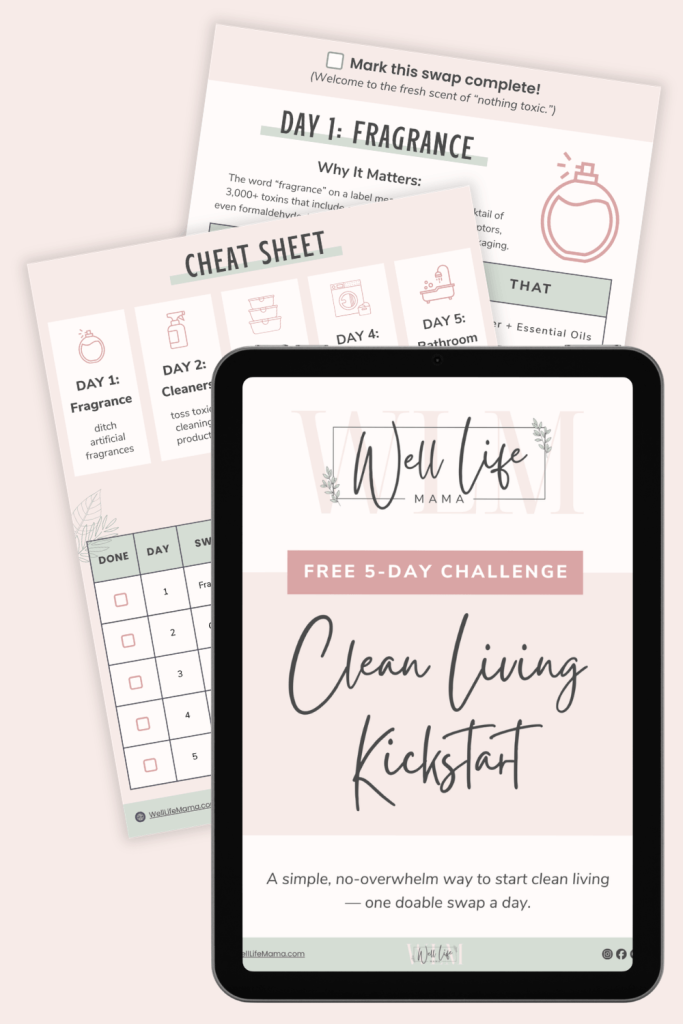
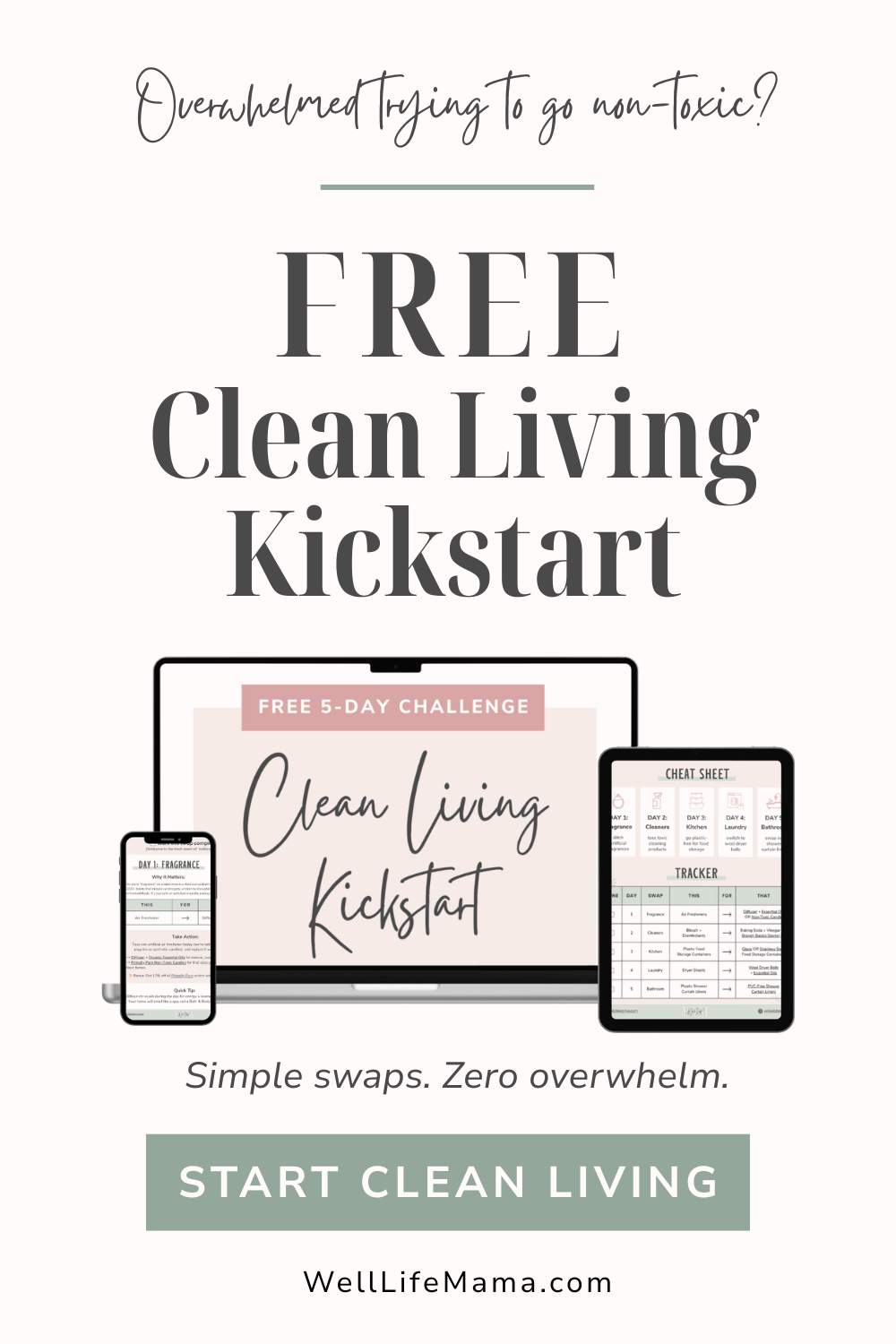
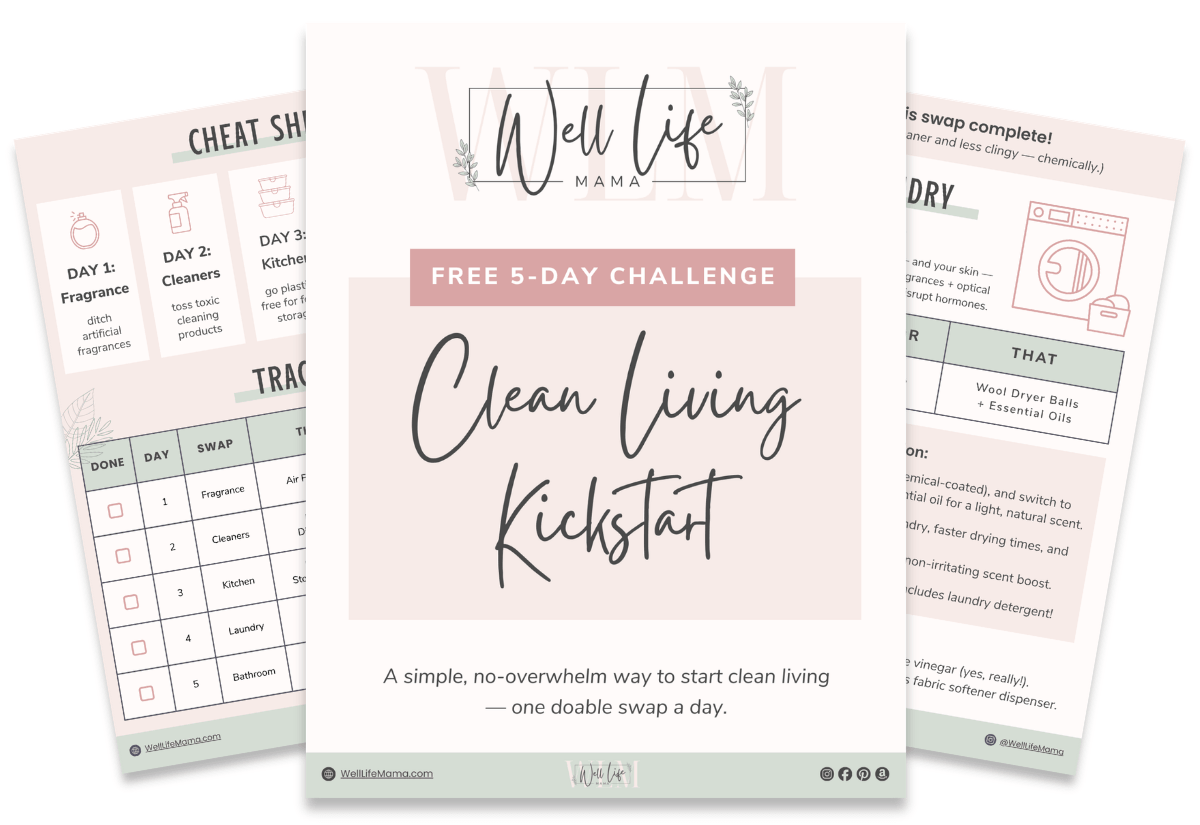
That’s why I created a free 5-Day Clean Living Kickstart that walks you through 5 simple swaps to reduce toxins in your home without hours of research.
✔ quick wins
✔ beginner-friendly swaps
✔ no overwhelm
The Biggest Hidden Toxins in Most Kitchens
Before we jump into the low-tox kitchen swaps, it helps to know how to reduce toxins in the kitchen with what toxins we’re actually trying to reduce.
PFAS (Forever Chemicals)
PFAS (per- and polyfluoroalkyl substances) are a group of chemicals commonly used in nonstick cookware coatings to create that smooth, easy-release surface.
The problem? Their nickname is “forever chemicals” because they don’t break down easily (if at all) in our bodies or the environment.
Where They Show Up:
- nonstick pans (especially older or scratched ones)
- some bakeware
- grease-resistant food packaging
When these coatings are overheated or start to wear down, they can release chemicals into your food and air.
Not exactly the secret ingredient you’re going for.
BPA & Plastics
Okay, I know pretty much everyone is familiar with BPA (bisphenol A) in plastics these days.
But…
Did you know that even BPA-free plastics can contain similar compounds (like BPS, BPF, etc.) that can also leach into your food and drinks, especially when heat is involved?
This can happen when:
- microwaving plastic containers
- storing hot foods in plastic
- using older or scratched plastic items
- plastic water bottles sit in the sun
Where They Show Up:
- plastic food storage containers
- plastic wrap
- takeout containers
- water bottles
Just because something says BPA-free doesn’t mean it gets a free pass—those replacement chemicals aren’t exactly saints either.
If any plastic in your kitchen isn’t BPA-free, that’s an easy place to start making a swap.
And if you still have older plastics hanging around? Those are worth upgrading too.

Artificial Fragrance
Artificial fragrance might sound harmless, but it’s often a catch-all term that can include hundreds (or even thousands) of undisclosed chemicals like phthalates and even formaldehyde.
Which is… a lot for something to smell like “fresh lemon.”
Where It Shows Up:
- dish soap
- dishwasher detergent (yes, the pods too)
- kitchen cleaners
- candles
- air fresheners
- even trash bags!
And no, brands don’t have to tell you what’s in their fragrance because they’re considered proprietary (sneaky).
Sometimes no smell is actually the cleanest smell.
Aluminum
Aluminum is a heavy metal that can have neurotoxic effects—and no level of heavy metal exposure is considered safe.
So while aluminum is common in everyday kitchen products, it’s not something you want regularly leaching into your food.
Where It Shows Up:
- aluminum foil
- cookware
- baking sheets + roasting pans
- disposable trays + packaging
- coffee makers
Acidic foods like tomatoes, citrus, or vinegar-based sauces can increase how much aluminum gets into your meals. And because repeated exposure adds up over time, aluminum is definitely worth avoiding.
👉 You may also like: 5 Easy Ways to Start Reducing Your Toxin Build Up
How to Choose Non-Toxic Kitchen Products
Once you start researching clean living products, it can feel like the internet is yelling:
“Everything is toxic!”
Suddenly you’re side-eyeing your frying pan and wondering if your Tupperware has been betraying you this whole time.
Take a deep breath.
You don’t need a chemistry degree (or a full kitchen overhaul) to make smarter choices. A few simple guidelines can help you choose non-toxic kitchen products without spiraling into ingredient-label overwhelm.
And if you want a step-by-step place to start, grab the Free 5-Day Clean Living Kickstart—it walks you through the easiest swaps first so you’re not guessing.
Choose Stable, Low-Tox Materials
When it comes to your kitchen, materials matter just as much as ingredients.
Some materials are naturally more stable, meaning they’re less likely to break down or leach anything into your food over time.
Look for:
- stainless steel (nickel-free 0/18 is best if you can find it)
- cast iron
- glass (boroscillate is lead-free and cadmium-free)
- ceramic (lead-free)
- wood (no mineral oil)
- bamboo (free from formaldehyde-based glue)
- silicone (100% pure + food-grade)
These are the go-to materials in most low-tox kitchens because they’re durable, non-reactive, and built to last (which also means fewer replacements—your wallet will appreciate that).
Avoid Heating Plastics
Here’s a simple rule of thumb:
Heat + plastic = not a great combo.
Even plastics labeled “microwave-safe” can degrade over time when exposed to heat, which increases the chance of chemicals leaching into your food.
Whenever possible:
- reheat food in glass
- let hot food cool slightly before storing in plastic (or better yet, store food in glass – just keep your food from touching plastic lids)
- avoid putting plastic in the dishwasher
- skip the Keurig (I know, I know… don’t hate me)
These are small shifts that can make a big difference over time.
Go Fragrance-Free
This is one of those small label details that makes a big difference.
If you’re trying to reduce exposure to hidden chemicals, look for products labeled “fragrance-free“—not just “unscented.”
Here’s why:
- Fragrance-free = no added fragrance ingredients
- Unscented = may still contain fragrance chemicals to mask odors
So even if something smells like nothing… it might not actually be nothing.
In the kitchen, this matters most for:
- dish soap
- dishwasher detergent
- cleaning sprays
When in doubt, fragrance-free is the safer bet—and honestly, your kitchen doesn’t need to smell like “Mountain Breeze Vanilla Citrus.”
Quick Reminder
You don’t need to replace everything in your kitchen overnight.
Most people build a low-tox kitchen by:
- swapping items as they wear out
- upgrading high-use items first (like cookware and food storage)
- making small, consistent changes over time
That’s how you get a healthier kitchen without the overwhelm or the all-or-nothing pressure.
15 Non-Toxic Kitchen Swaps for a Healthier Home
These non-toxic swaps help reduce some of the biggest sources of toxins in your kitchen—aka the stuff touching your food on a daily basis.
And remember, you don’t need to do all of these at once (but if you suddenly feel the urge to upgrade your entire kitchen… I support it 😉).
Small upgrades over time add up.
1. Plastic Mixing Bowls → Glass or Stainless Steel Mixing Bowls
Plastic mixing bowls might seem harmless, but they’re often used with hot ingredients, acidic foods, and repeated washing—all of which can increase the chances of chemicals leaching over time.
And if your bowls are scratched, cloudy, or have that “been through a lot” look? Even more reason to upgrade.
What to use instead:
- glass mixing bowls
- stainless steel mixing bowls
- ceramic mixing bowls (lead-free and cadmium-free)
These materials are more stable, easier to clean, and don’t hold onto stains or odors the way plastic tends to.
Plus, let’s be honest—switching to glass or stainless just makes your kitchen feel a little more put together.
👉 You may also like: 21 Clean Living Benefits You’ll Actually Notice in Real Life
2. Plastic Food Storage → Non-Toxic Food Storage Containers
Plastic food storage containers are one of those things most of us use daily—leftovers, meal prep, snacks on the go.
The catch? They’re constantly exposed to heat, oils, and repeated washing, which can wear them down over time (especially if they’re warped, stained, or mysteriously orange… you know the ones).
What to use instead:
- glass food storage containers
- stainless steel containers with glass lids
- glass mason jars with silicone lids or stainless steel lids (free from coatings, BPA, PVC and phthalates)
These non-toxic food storage options are more durable, easier to clean, and won’t absorb food smells or stains.
Also, not to be dramatic, but opening your fridge to neat glass containers instead of a chaotic pile of mismatched plastic lids? Life upgrade.
3. Plastic Wrap → Beeswax Wraps or Reusable Lids or Bags
Plastic wrap is one of those kitchen staples that seems harmless… until you realize how often it touches your food (and how quickly you go through it).
It’s also single-use, which means you’re constantly unrolling, tossing, and buying more. Not exactly a long-term solution.
What to use instead:
These plastic wrap alternatives can be used again and again, and once you get used to them, you probably won’t miss plastic wrap at all.
Plus, not having to wrestle with cling wrap that sticks to literally everything except the bowl? Big win.

4. Plastic Cutting Boards → Wood Cutting Boards
Plastic cutting boards might seem like a safe, everyday option—but over time, all that chopping, slicing, and dicing creates tiny grooves in the surface.
And those grooves? They can release microplastics, meaning small bits of plastic end up in your food without you even realizing it.
Not exactly the seasoning you were going for.
What to use instead:
- wood cutting boards finished with food-grade oils (not petroleum-based mineral oil or synthetic sealants)
- bamboo cutting boards made without formaldehyde-based glues
These natural materials are more durable and don’t break down into microplastics with regular use.
And bonus: a lot less “am I accidentally eating plastic right now?”
5. Plastic Cooking Utensils → Wood or Silicone Cooking Utensils
Plastic spatulas, spoons, and tongs are everywhere in the kitchen—but when they touch heat, they can leach microplastics and chemicals like BPA into your food.
Yeah… you probably don’t want those sneaking into your stir fry.
What to use instead:
- solid wood cooking utensils (no glue or mineral oil finish)
- 100% food-grade silicone cooking utensils (BPA- and phthalate-free)
These non-toxic cooking utensil options are heat-safe, durable, and won’t crumble over time. Plus, they just feel nicer in your hand while you cook—and zero “did I just stir in plastic?” paranoia.
👉 You may also like: Non-Toxic Home Swaps: 15 Simple Ways to Reduce Toxins in Your Home
6. Plastic Colanders → Stainless Steel or Silicone Colanders
Plastic colanders are one of those things most of us don’t think twice about—until you realize that pouring boiling water over them can leach microplastics and other chemicals into your food.
Your dinner probably shouldn’t come with a side of plastic, right?
What to use instead:
- stainless steel colanders
- 100% silicone collapsible colanders (heat-safe and plastic-free)
These plastic alternatives are built to last, handle hot foods without melting or leaching, and give you peace of mind every time you drain your pasta.
7. Plastic Water Bottles → Stainless Steel or Glass Water Bottles
Plastic water bottles go everywhere—car, gym, diaper bag, sitting in the sun, rolling around on the floor…
And with all that use (and reuse), they can break down over time and leach microplastics and chemicals like BPA into your water—especially when exposed to heat (like sitting in a hot delivery truck).
Not exactly what you’re trying to hydrate with.
What to use instead:
- stainless steel water bottles (insulated and lead-free)
- glass water bottles (with protective silicone sleeves for durability)
- 100% food-grade silicone tumblers
These non-toxic water bottle materials are more durable, easy to clean, and don’t absorb weird tastes or smells over time.
Because your water should taste like… water. Not plastic.
🌿 Crunchy Tip: Try to avoid plastic straws and spouts when possible since these come into contact with your water. Stainless steel or silicone options are a better choice for reducing microplastic exposure. But if plastic is your only option, go for a spout over a straw since it has less contact with your water.
5 Easy Swaps To Start Clean Living
Overwhelmed by labels, toxins, and where to even begin? This FREE 5-Day Clean Living Kickstart shows you how to start clean living with simple swaps—no extremes, no stress, no pressure to be perfect.
8. Coffee Makers with Plastic Parts → Plastic-Free Coffee Makers
Your coffee maker might look innocent just sitting there on your counter. But… most have hot water running through plastic components every. single. day.
And when heat + plastic are involved, that can mean microplastics and chemicals are making their way into your morning cup of java.
Not exactly the clean start to your day you were going for.
What to use instead:
- French press (glass or stainless steel)
- glass pour-over
- Caraway 10-Cup Coffee Maker with plastic-free brew system (only glass or stainless steel come in contact with your water and coffee)
- plastic-free brewer (no plastic or aluminum touching water)
These non-toxic coffee makers reduce how much hot liquid touches plastic—so your coffee stays… just coffee.
Because your caffeine boost shouldn’t come with a side of mystery ingredients.
🌿 Crunchy Tip: If you use a French press or pour over, heat your water up with a stainless steel electric kettle that has no plastic coming in contact with your water.
9. Tap Water → Filtered Water
Tap water can contain super sketchy contaminants like chlorine, heavy metals, PFAS, fluoride, microplastics, industrial chemicals, and more—all things you definitely don’t want in your daily water.
And since you use water for basically everything (drinking, cooking, coffee, baby bottles…), those nasties can add up quickly.
What to use instead:
- water filter bottles (portable filtration system for travel and on-the-go use)
- countertop reverse osmosis water purifier
- gravity water filter (I’m still trying to find the best replacement filters for my Berkey that will remove everything I want them to)
- refrigerator water filter
- under the sink water filtration system
- whole-house water filtration system
Choose a system that fits your space and lifestyle, and look for third-party testing or certifications like one of these:
- NSF/ANSI 53 (reduces heavy metals and harmful contaminants)
- NSF/ANSI 58 (reverse osmosis systems that remove a wider range of contaminants, including fluoride)
Because filtering your water is one of the most impactful swaps you can make—it’s something you’re using constantly throughout the day.
🌿 Crunchy Tip: Check your local water report using the EWG Tap Water Database so you can choose a filter that targets your area’s biggest contaminants.
👉 You may also like: 15 Ways to Save Money on Non-Toxic Items for Healthy Clean Living
10. Aluminum Foil → Unbleached Parchment Paper
Aluminum foil is one of those things we use without thinking—covering leftovers, lining baking sheets, wrapping food for the oven or grill.
But since aluminum is a heavy metal, using foil (especially with heat or acidic foods) can cause it to transfer into your food.
If you’re not into sneaky heavy metals in your dinner, it’s time to swap.
What to use instead:
- unbleached, chlorine-free parchment paper
- food-grade silicone baking mats
- reusable beeswax food wraps
These safer options get the job done without the constant exposure—and many of them are reusable (win-win!).
11. Aluminum Baking Sheets + Pans → Stainless Steel or Silicone Bakeware
Aluminum baking sheets and pans are behind most of your go-to baked goods—muffin tins, loaf pans, cookie sheets… all the things used for muffins, breads, cookies, and other homemade treats.
But aluminum is a heavy metal that can leach into your food, especially with high heat. And let’s be honest—no one signed up for metal in their brownies.
Don’t want heavy metals crashing your dinner party? Time to switch.
What to use instead:
- stainless steel baking sheets
- stainless steel cake pans
- stainless steel muffin pans
- silicone muffin pans
- Caraway non-stick ceramic-coated bakeware (PFAS-free)
- food-grade silicone baking mats
🌿 Crunchy Tip: Get cash back on your Caraway purchase with Rakuten! Join Rakuten for free, search for “Caraway,” click “Shop Now” and earn cash back plus a $50 bonus when you spend $50 within 90 days of joining.
These healthier bakeware swaps handle the heat, last forever, and won’t sneak anything metallic into your baked goods—bonus: cleanup is often easier too.
🌿 Crunchy Tip: For silicone bakeware, give it a quick “break-in” before first use by baking it empty for about an hour at 350°F in a well-ventilated kitchen. Some studies have shown that new silicone can release trace compounds during the first few uses.
When shopping, look for 100% food-grade, platinum-cured silicone. Quick hack: do the pinch test—pure silicone should stay the same color when you pinch or twist it. If it turns white, that can be a sign of sketchy fillers.
Silicone is definitely a step up from nonstick, but for high-heat baking above 350°F, your most “no-drama” options are stainless steel or glass.
👉 You may also like: Non-Toxic Pantry Swaps: 15 Clean Eating Alternatives for Everyday Food Staples
12. Nonstick Pans → Stainless Steel, Cast Iron, or Ceramic Pans
Nonstick pans are popular for a reason—they’re easy to cook with and even easier to clean.
But that slick coating? It’s often made with PFAS (“forever chemicals”), which can break down over time, especially when scratched or overheated.
Not exactly what you want mixed into your eggs.
What to use instead:
These non-toxic cookware options are just as functional once you get the hang of them—and they tend to last a whole lot longer, too.
13. Dishwasher Pods → Non-Toxic Dishwasher Tablets
Dishwasher pods might seem like a “set it and forget it” kind of product—but most conventional options contain synthetic fragrances, dyes, and harsh chemicals that get blasted all over your dishes every cycle.
And then there’s the outer film. Most pods are wrapped in a dissolvable plastic (usually PVA) that can leave plastic particles on your clean dishes.
And since those dishes are what you eat off of… yeah, they’re worth swapping out with a fragrance-free + EWG Verified version.
What to use instead:
These options clean just as well without coating your dishes in mystery residues or microplastics.
Because clean dishes shouldn’t come with a side of chemicals.

14. Dish Soap → Fragrance-Free, Non-Toxic Dish Soap
Dish soap is something you use every single day—and it goes directly onto the things you eat off of, drink from, and cook with.
Many standard options contain synthetic fragrances, dyes, and harsh surfactants that can leave behind toxic residues on your dishes (even after rinsing).
Not exactly what you want hanging around on your “clean” plates.
What to use instead:
- Branch Basics Foaming Wash
- Dr. Bronner’s Pure-Castile Magic Soap Liquid (for greasier dishes)
- ATTITUDE Unscented Dish Soap (EWG Verified)
Non-toxic dish soap gets your dishes just as clean—without all the extra stuff you didn’t ask for.
“Clean” should actually mean clean.
15. Synthetic Kitchen Cleaners → Non-Toxic, Fragrance-Free Kitchen Cleaners
Kitchen cleaners get sprayed on everything—your counters, stovetop, sink… all the surfaces where you prep food daily.
Many standard cleaners contain synthetic fragrances, harsh chemicals, bleach (i.e. chlorine) and other undisclosed ingredients that can linger on those surfaces long after you’ve wiped them down.
And when those surfaces come into contact with your food? Yeah… no thank you.
What to use instead:
- DIY baking soda + vinegar
- Branch Basics All Purpose Spray
Non-toxic kitchen cleaners can still clean effectively—without leaving behind toxins you can’t see (or pronounce).
Because the last thing your food needs is a side of cleaning chemicals.
Want a shortcut?
I’ve gathered my go-to low-tox kitchen essentials and non-toxic kitchen swaps so you don’t have to go down a 47-tab research spiral.
👉 Shop my Amazon Kitchen Picks here
How to Start a Low-Tox Kitchen (Without the Overwhelm)
If you’re staring at this list thinking:
“Okay… but that’s pretty much my entire kitchen.”
Take a deep breath. You don’t need to replace everything overnight.
The easiest way to build a low-tox kitchen is to:
1. Upgrade Cleaning Products First
Focus on what touches your kitchen and food surfaces the most: dish soap, countertop sprays, and dishwasher detergent. Swapping these for non-toxic kitchen products is one of the fastest ways to reduce kitchen toxins without feeling overwhelmed. Bonus: simpler products = less clutter and stress.
2. Prioritize Cookware & Food Storage
Heat matters! Items that touch hot food—like pots, pans, and storage containers—can leach chemicals if they’re not safe. Choosing non-toxic kitchen swaps here protects your family and makes the biggest impact on your clean living kitchen.
3. Reduce Plastics Gradually
Plastic shows up everywhere in the kitchen, so don’t feel like you have to replace it all at once. Start with the obvious offenders, like the tomato-stained storage containers, then swap out other items over time. Step-by-step upgrades keep it doable and sustainable.
4. Replace Other Items as They Wear Out
Even small changes—like upgrading a worn-out cutting board or switching to a safer colander—add up over time. These healthy kitchen swaps may feel minor individually, but together they create a low-tox kitchen that’s safer for your family.
If you’re side-eyeing your dishes and silverware right now, I see you. They can matter too, especially with hot food.
But they’re typically a lower priority since they’re not exposed to the same high, sustained heat as cookware. Start with the big wins first.
Progress beats perfection. And the best part? Each of these swaps moves you closer to a low-tox kitchen that’s healthier for your family, and actually feels doable.
But hey, if you suddenly feel the urge to upgrade every cabinet and drawer in your kitchen with one epic shopping spree… I’m here for it. 🙋♀️
👉 You may also like: Non-Toxic Swaps: How to Replace Toxic Items and Start Clean Living (Beginner Guide)
Want an Easy Place to Start?
If you’re new to clean living, the hardest part is usually figuring out which non-toxic swaps actually matter most.
That’s exactly why I created the Free 5-Day Clean Living Kickstart.
It walks you through five simple swaps that significantly reduce toxins in your home—without overwhelm or expensive upgrades.
Each day focuses on one quick change you can make in just a few minutes.
Grab it here 👉 5-Day Clean Living Kickstart
Continue Building Your Low-Tox Home
These swaps are real game changers for your non-toxic kitchen. Nice work reducing toxin exposure in the heart of your home! 👏
But your toxin-free journey doesn’t have to stop here. Want to keep the low-tox party going? Here are some other areas to level up your clean living game:
- Pantry Non-Toxic Swaps
- Home Non-Toxic Swaps
- Personal Care Non-Toxic Swaps
- Pregnancy Non-Toxic Swaps
- Baby Non-Toxic Swaps
- Toddler Non-Toxic Swaps
Want the full roadmap to a low-tox home? Start with:
👉 Non-Toxic Swaps: How to Replace Toxic Items and Start Clean Living (Beginner Guide)
It’s your go-to resource for swapping out the sneaky toxins hiding all over your home (because yes, they are everywhere).

FAQ: Non-Toxic Kitchen Swaps
Still have questions about non-toxic kitchen swaps or creating a low-tox kitchen? Here are answers to some of the most common questions about reducing kitchen toxins and choosing safer products for clean eating.
What are the most important non-toxic kitchen swaps?
Focus on the heavy hitters: cookware, food storage containers, and kitchen cleaning products. These are the items that touch your food (or dishes) the most—swap them first, and you’ll cut down a ton of toxins fast.
Is stainless steel safer than nonstick cookware?
Yep! Stainless steel doesn’t rely on chemical coatings like most nonstick pans, so it’s a favorite for low-tox kitchens. Durable, easy to clean, and safe—it’s basically the VIP of cookware.
What is the healthiest cookware to use?
Think stainless steel, cast iron, ceramic, or glass. These materials are stable, low-tox, and built to last—no mystery chemicals crashing your dinner party.
What is the easiest non-toxic kitchen swap to start with?
Swap plastic food storage containers for glass ones. It’s simple, affordable, and instantly reduces the risk of chemicals leaching into your meals—especially hot ones.
Are non-toxic kitchen products expensive?
Not necessarily! While some low-tox swaps can cost a bit more upfront, they often last longer and pay off over time.
Plus, there are plenty of ways to save—check out my clean living Discounts page and guide for 15 Ways to Save Money on Non-Toxic Items with tips on getting the best deals while upgrading your kitchen.
Can I still use aluminum foil safely?
Short answer: not really. Aluminum is a heavy metal that can leach into food, especially when used with heat or acidic dishes like tomatoes or citrus-based sauces. Swapping foil for safer alternatives keeps your meals free from sneaky metals.
Final Thoughts on Non-Toxic Kitchen Swaps for Creating a Low-Tox Kitchen
Creating a healthier kitchen doesn’t require perfection. You can build a low-tox kitchen the same way you build any habit—one small change at a time.
Maybe you start with a shiny new stainless steel pan.
Swap a couple of plastic food containers for glass.
Replace your kitchen cleaner when the bottle runs empty.
Before you know it, those little changes add up to a kitchen that’s cleaner, simpler, and way less dependent on sneaky chemicals.
And the best part?
Many of these non-toxic kitchen swaps are more durable and long-lasting, which means fewer replacements and less waste down the road.
Progress over perfection.
Ready to Kickstart Your Clean Living Journey?
If you’re ready to reduce toxins without a complete home overhaul, the Free 5-Day Clean Living Kickstart is your shortcut.
Over 5 days, you’ll get:
- One simple, high-impact swap per day
- No intense research, expensive upgrades, or panic-purging your life
- A practical roadmap for creating a healthier home—one small step at a time
Think of it as your crunchy BFF-approved guide for clean living made easy.
👉 Download the free 5-Day Clean Living Kickstart and start working towards a low-tox lifestyle, minus the overwhelm.
5 Days to a Cleaner, Low-Tox Home (Without the Overwhelm)
You don’t need to replace everything you own or go down an ingredient-research rabbit hole to start living cleaner.
This FREE 5-Day Clean Living Kickstart walks you through one simple swap a day—the kind that actually fits into real life (yes, even mama life).
No overwhelm. No perfection required. Just progress you can feel good about.







0 Comments