
If you’ve ever flipped over a cleaning product bottle and thought, “Wait… why does this need a warning label?”—welcome. You’re in the right place.
Creating a healthier home doesn’t mean tossing everything you own and living off vinegar + baking soda alone (unless you really love them—no judgment). It’s about making simple, realistic upgrades where they actually matter.
That’s where these non-toxic home swaps come in.
Because the truth is, a lot of the products we use every single day—cleaners, laundry detergent, air fresheners, even things like candles and bedding—can quietly expose us to ingredients that aren’t doing our bodies any favors.
And the tricky part? Most of them look completely harmless sitting on your shelf.
But this non-toxic home swaps guide breaks down the biggest offenders hiding in your home, what to use instead, and how to start creating a low-tox space without the overwhelm, the perfection pressure, or a full-blown house purge.
Think of it as your step-by-step home upgrade plan… minus the stress spiral.
Medical Disclaimer: This post is for educational purposes only and is not medical advice. I’m not a healthcare professional, and nothing here is a substitute for guidance from your provider. Always consult a qualified professional before making changes to your health, supplements, or lifestyle. Please see the full disclaimer for more details.
Affiliate Disclosure: This post may contain affiliate links or links to Amazon. If you choose to purchase anything through these links, I may earn a commission at no cost to you. As an Amazon Associate, I earn from qualifying purchases. Thank you so much for your support, you’re the best! See the full disclosure for details.
Hidden Toxins in Your Home
Your home might feel like a safe haven. But a lot of everyday household products quietly pack a chemical punch—from what you clean with to what you sleep on… and even the devices you use every day.
They can expose you to toxins that disrupt hormones, impact development, and affect long-term health.
Here’s what’s hiding on your shelves and why it matters.
Want an Easy Place to Start?
If you’re new to clean living, figuring out which swaps actually matter can feel overwhelming.
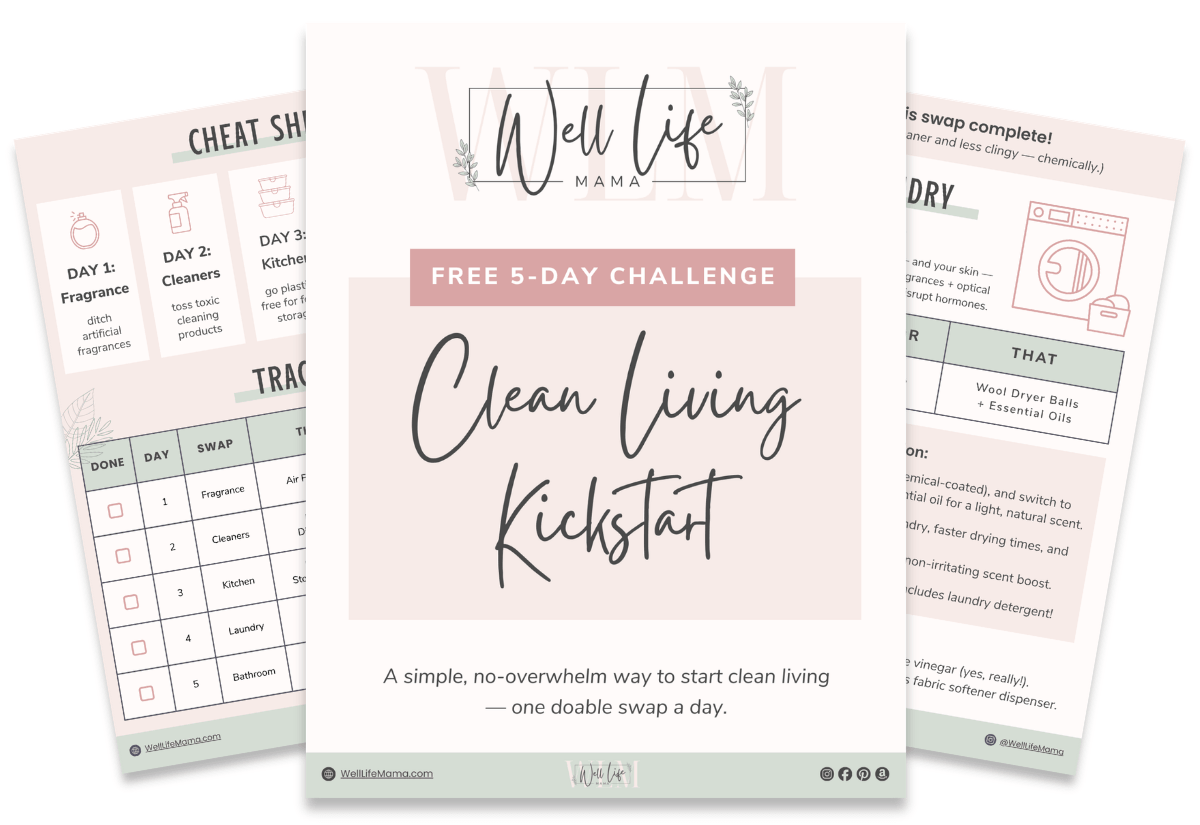
That’s why I created a free 5-Day Clean Living Kickstart that walks you through 5 simple swaps to reduce toxins in your home without hours of research.
✔ quick wins
✔ beginner-friendly swaps
✔ no overwhelm
Phthalates (Fragrance & Plastics)
Phthalates are chemicals used to make plastics flexible and to carry synthetic fragrances.
They can interfere with hormone function, impact fertility, and affect reproductive development—so they’re not something to shrug off.
Where They Show Up:
- Scented candles
- Air fresheners
- Laundry fragrance boosters
- Vinyl shower curtains
- Scented trash bags
If “tropical breeze” or “mountain spring” is your jam, phthalates can still cling to dust and air in your home.
Not exactly what you want circulating around your furniture, your family… or your body.
Volatile Organic Compounds (VOCs)
VOCs are neurotoxic chemicals that hang out in your air as hazardous gases—and they don’t disappear when the smell fades. Common offenders include benzene, formaldehyde, chloroform, ethylene glycol, and toluene.
Chronic exposure has been linked to a range of serious health problems, including autoimmune diseases, liver, kidney, and central nervous system damage, and even cancer.
Where They Show Up:
- Conventional cleaning sprays
- Aerosol products
- Scented candles and plug-in air fresheners
- Paints, varnishes, and finishes
- Memory foam (pillows, cushions, and mattresses)
- Standard mattresses
That “fresh” smell you love? It doesn’t mean your home is safe. These chemicals can linger in your air and on surfaces long after you’ve used the product… in ways you definitely weren’t going for.
👉 You may also like: Non-Toxic Swaps: How to Replace Toxic Items and Start Clean Living (Beginner Guide)
Flame Retardants
Flame retardants are added to household textiles and furnishings to slow the spread of fires—but some are linked to hormone disruption, brain and reproductive effects, and even cancer.
They’re persistent chemicals that can build up in your fabrics and household dust over time, exposing your family every day.
Where They Show Up:
- Conventional mattresses
- Mattress toppers
- Pillows
- Upholstered furniture
Think of it like this: these chemicals are basically that uninvited guest you can’t see but can still make a mess of your body over time.
They quietly hang out in your home long after the product is unpacked… not exactly the roommate you were hoping for.
Triclosan & Antibacterials
Once common in soaps and cleaning products, triclosan and other antibacterials have been linked to hormone disruption and antibiotic resistance.
Where They Show Up:
- Traditional hand soaps
- Some bathroom cleaners
- Dish soaps labeled “antibacterial”
Switching to non-toxic, non-antibacterial options protects your body and your microbiome. No need to compromise cleanliness.
BPA (Bisphenol A)
BPA is a chemical that interferes with hormones and has been associated with reproductive issues, metabolic disruption, and developmental concerns.
Where They Show Up:
- Toilet paper made from recycled fibers
- Paper towels made from recycled fibers
- Receipts or other recycled paper items
Not exactly what you want in your household staples (especially when they touch your lady parts).
👉 You may also like: 5 Easy Ways to Start Reducing Your Toxin Build Up
How to Choose Non-Toxic Home Products
At this point, you might be looking around your house like… cool cool cool, everything is toxic 😅
Take a breath—you don’t need to replace everything overnight.
Creating a low-tox home isn’t about perfection. It’s about making smarter choices, one non-toxic home swap at a time, as things run out or need replacing anyway.
Here’s how to keep it simple (and avoid going down a Google rabbit hole at 11pm):
1. Start With the Biggest Offenders
Not all low-tox home swaps are created equal.
Focus first on the products you:
- use every day
- spray, heat up, or breathe in
- use on large surface areas (like floors and countertops)
- or that come into frequent contact with your skin (like laundry and bedding)
Think: cleaning products, laundry detergent, air fresheners, and anything going into your air or onto your bed.
2. Rethink “Fragrance”
If there’s one ingredient category to start side-eyeing immediately, it’s fragrance.
Companies aren’t required to disclose what’s in it, and it can be a mix of dozens (sometimes hundreds) of chemicals—often including phthalates.
If a product smells like:
- tropical breeze
- fresh linen
- mountain spring
…it’s probably not coming from anything found in nature.
Look for:
- products scented with essential oils (and used lightly)
- “fragrance-free” (not just “unscented”—which can still contain hidden fragrance chemicals used to mask smells)
3. Simplify Your Cleaning Routine
You do not need a different cleaner for every surface in your house.
In fact, that’s usually where things get more complicated, more expensive—and more toxic.
Instead of juggling a dozen different cleaning products, simplify your routine with fewer, more versatile options that are also non-toxic (I’ll show you exactly what to use below).
Fewer products = fewer mystery ingredients = fewer things to stress about.
4. Don’t Get Distracted by Greenwashing
Words like:
- “natural”
- “eco-friendly”
- “clean”
…sound nice, but they’re not regulated.
Translation: they don’t actually guarantee anything.
Flip the bottle over. Look at the ingredient list. If it reads like a chemistry exam you didn’t study for, it’s probably not as “clean” as it claims to be.
If you’ve ever felt confused trying to decode labels, you’re not alone—that’s exactly why I created a simple Greenwashing Decoder (you can find out how to get it inside my free 5-Day Clean Living Kickstart).
5. Upgrade Gradually (Not All at Once)
You don’t need a full home detox weekend.
The easiest way to start making non-toxic home swaps is:
- replace items as they run out
- swap one category at a time
- focus on progress, not perfection
Maybe you start with cleaning products.
Then your candles and air fresheners.
Then move on to laundry.
Before you know it, your home starts feeling… different. In a good way.
6. Focus on What Matters Most
It’s easy to go down a rabbit hole trying to make everything perfect.
But you don’t need to.
Start with the non-toxic home swaps that:
- reduce daily exposure
- impact your air quality
- come into contact with your skin the most
That’s where you’ll get the biggest return for your effort.
👉 You may also like: 21 Clean Living Benefits You’ll Actually Notice in Real Life
15 Non-Toxic Home Swaps for a Healthier Home
These non-toxic swaps tackle some of the biggest sources of hidden chemicals in your home—the products touching your skin, your laundry, and your air… every single day.
And remember, you don’t need to do all of these at once (though if you suddenly feel the urge to swap out your whole house, I’m here for it 😉).
Small changes over time add up to big results—and your body, your family, and your home will thank you.
5 Easy Swaps To Start Clean Living
Overwhelmed by labels, toxins, and where to even begin? This FREE 5-Day Clean Living Kickstart shows you how to start clean living with simple swaps—no extremes, no stress, no pressure to be perfect.
1. Conventional Cleaning Products → Multi-Use Non-Toxic Cleaning System
Most cleaning products on the market are loaded with synthetic fragrances, harsh chemicals, and ingredients you probably wouldn’t want lingering on your countertops—or in your air.
And somehow, we’ve been convinced we need a different bottle for every surface in the house.
What to use instead:
- Branch Basics (a multi-use system that can replace all-purpose, glass, floor, and bathroom cleaners)
- Dr. Bronner’s Pure-Castile Magic Soap (check out the Going Green with Lisa Bronner website for all the ways you can use Dr. Bronner’s castile soap for cleaning)
- DIY basics like baking soda + white vinegar
These options simplify your routine, cut down on clutter, and help reduce the number of questionable ingredients hanging around your home.
Honestly, fewer bottles under the sink is a win in itself.

2. Conventional Laundry Detergent + Fabric Softener → Non-Toxic Laundry Detergent + Natural Fabric Softener
Laundry products might seem harmless—but they’re one of the most consistent toxin exposures in your home since they’re literally embedded in your clothes, sheets, towels and other fibers touching your skin.
Standard laundry detergent options usually contain synthetic fragrance, dyes, and other additives that can linger long after the wash cycle ends.
And fabric softeners leave behind a coating of synthetic fragrance and chemicals for that “soft” and “fresh” feel—but it doesn’t just rinse out. It sticks around on your clothes… and your skin.
What to use instead:
- Branch Basics Laundry Detergent OR Concentrate + Oxygen Boost
- fragrance-free + plant-based detergent (EWG Verified)
- skip conventional fabric softeners—use white vinegar instead (yes, really—simply add it to the rinse cycle 😉)
This combo keeps your clothes clean and soft—without the leftover chemical residue.
Because your laundry routine should feel fresh… not leave a layer of toxins behind.
3. Dryer Sheets + Fragrance Boosters → Wool Dryer Balls + Essential Oils
Dryer sheets and fragrance boosters might make your laundry smell amazing, but they’re also a major source of synthetic fragrance—aka hidden phthalates and other chemicals you don’t want lingering on your clothes.
And since your clothes, sheets, and towels are constantly touching your skin, those residues don’t just disappear—they stick around in ways you definitely weren’t going for.
What to use instead:
🌿 Crunchy Tip: Add a few drops of pure essential oils for a natural scent boost!
Wool dryer balls help soften fabrics, reduce static, and cut down drying time—without coating your laundry in synthetic fragrance.
Soft, fresh laundry… minus the chemical extras.
👉 You may also like: Non-Toxic Kitchen Swaps: 15 Easy Changes for a Low-Tox Kitchen & Healthier Cooking
4. Synthetic Candles → Natural Candles
Candles are cozy, but many traditional ones are made from paraffin (a petroleum byproduct) and can release VOCs and soot into your air.
Plus, scented candles often sneak in synthetic fragrances and phthalates—basically turning “relaxing vibes” into a mini chemistry experiment.
What to use instead:
- Primally Pure Candles with beeswax + coconut wax and organic essential oils (use code “WLM” for 10% off every order)
- beeswax, coconut, or soy wax candles
- unscented or naturally scented with pure essential oils (avoid fragrance oils)
- zinc and lead-free wicks made of cotton or untreated wood (avoid metal cores—they can release heavy metals when burned)
🌿 Crunchy Tip: Try a flameless candle warmer lamp for a smoke-free candle experience.
Get 10% OFF every Primally Pure order with discount code “WLM” (save this code – it can be used every time you order)!
🌿 Crunchy Tip: Get cash back on your Primally Pure purchase with Rakuten! Join Rakuten for free, search for “Primally Pure,” click “Shop Now” and earn cash back plus a $50 bonus when you spend $50 within 90 days of joining.
You still get that warm, flickering glow without filling your living room with chemicals you didn’t sign up for. Light ‘em up and breathe easy.
5. Air Fresheners (Plug-Ins + Aerosol Sprays) → Diffuser + Air Purifier
Those plug-ins and aerosol sprays might make your house smell like a tropical vacation or mountain getaway, but they’re basically pumping phthalates, VOCs, and other sneaky chemicals into the air you breathe every day.
What to use instead:
- a diffuser with pure essential oils (lavender, lemon, eucalyptus, etc.)
- an air purifier with a HEPA + activated carbon filter to actually clean the air
This way, your home smells fresh without trading your lungs for a chemical cocktail. Plus, you can get the bonus of actually removing toxins and allergens, not just masking them.
🌿 Crunchy Tip: Air out your home regularly (even in the winter). Indoor air quality is usually way worse than the great outdoors—a little fresh air goes a long way.
6. Conventional Pillows → Organic Pillows
Your pillow isn’t just a headrest—it’s where your face, hair, and skin cozy up for hours every night.
Conventional pillows can be stuffed with polyester (a petroleum-based plastic) or synthetic foam and often treated with flame retardants, all of which release VOCs while you sleep.
Not exactly the kind of thing you want to be breathing in—or touching your skin—all night long.
What to use instead:
- Avocado Organic Pillows (I use and absolutely love the adjustable Avocado Green Pillow)
- organic pillows made from cotton, kapok, wool, and/or natural latex
- pillows made without synthetic flame retardants or chemical finishes
🌿 Crunchy Tip: Get cash back on your Avocado Green Mattress purchase with Rakuten! Join Rakuten for free, search for “Avocado Green Mattress,” click “Shop Now” and earn cash back plus a $50 bonus when you spend $50 within 90 days of joining.
Sleep tight knowing your pillow isn’t quietly working against your health while you dream.
Sweet dreams, toxin-free style.
7. Conventional Sheets → Organic Sheets
Your sheets are in constant contact with your skin for hours every single night.
And just like pillows, sheets are often made from plastic-based fibers like polyester or treated with chemical finishes, dyes, and wrinkle-resistant coatings that can release VOCs into your air.
So while you’re trying to get your beauty sleep… your bedding might be doing the opposite.
What to use instead:
- Avocado Organic Sheets
- Coyuchi Organic Sheets
- Boll & Branch Organic Sheets
- organic cotton or linen sheets
- look for certifications like GOTS (Global Organic Textile Standard)
These materials are breathable, comfortable, and free from the chemical treatments you don’t want to be sleeping with.
Because better sleep starts with what you’re sleeping on.
👉 You may also like: GIFT GUIDE: The Best Non-Toxic Wellness Gifts for Health Junkies They’ll Actually Want
8. Conventional Mattresses → Non-Toxic Mattresses
Your mattress is one of the biggest sources of toxins in your home—and you spend hours on it every single night.
The average mattress is made with synthetic foams, formaldehyde-based adhesives, and flame retardants that can release VOCs into your air, especially when combined with body heat.
So while you’re sleeping, you’re not just resting—you’re breathing in chemicals all. night. long.
What to use instead:
- Avocado Organic Mattress
- My Green Mattress Organic Mattress
- organic mattresses made from natural latex, organic cotton, and wool with certifications like GOTS (Global Organic Textile Standard) and GOLS (Global Organic Latex Standard)
Look for a non-toxic mattress made without synthetic foams or harsh chemical treatments, so you can sleep a little easier—literally.
Because your bed should be helping you recharge… not exposing you to a vapor of toxins every night.
9. Conventional Mattress Toppers → Organic Mattress Toppers
If a brand new mattress isn’t in the budget right now, your mattress topper is a really good place to start.
Most mattress toppers are made from the same synthetic foams and materials as mattresses, meaning they can release VOCs into your air too—right where you sleep.
What to use instead:
- Avocado Organic Mattress Toppers (I have the Eco Organic Mattress Topper in 3″ Medium, and it’s heaven)
- My Green Mattress Organic Latex Topper
- organic mattress toppers made from natural latex, wool, or organic cotton with certifications like GOTS or GOLS
A non-toxic mattress topper is one of the easiest ways to upgrade your sleep environment without the price tag of a whole new mattress.
A softer bed and fewer chemicals? Yes, please!

10. Plastic Shower Curtains + Liners → Fabric or Low-Tox Shower Curtains + Liners
That plastic shower curtain or liner? They can be a major source of VOCs in your bathroom.
Many conventional options are made from PVC (polyvinyl chloride), which can release toxic chemicals into the air—especially in a warm, steamy shower environment (aka the perfect setup for off-gassing).
So every time you shower, you could be breathing in more than just steam.
What to use instead:
- Boll & Branch Organic Cotton Shower Curtains
- fabric shower curtains or liners (like organic cotton, hemp or natural linen) that are not treated with antimicrobial or water-resistant chemicals
- “PVC-free” or “vinyl-free” low-tox plastic shower curtains
These alternatives skip the harsh toxins and help keep your bathroom air a little cleaner.
Because your shower should feel like a spa moment… not a science experiment.
11. Toilet Cleaner → Non-Toxic Toilet Cleaner
Traditional toilet cleaners often contain harsh chemicals, synthetic fragrances, and dyes that don’t just disappear after you flush.
They can linger on surfaces (and in the air), turning your bathroom into a mini chemical cloud.
What to use instead:
- Seventh Generation Toilet Bowl Cleaner (rated A with the EWG, and the fragrance is plant-derived with full disclosure of what’s in it)
- Branch Basics Bathroom Spray + Oxygen Boost (use code “WLM15” for 15% off your first order)
These options get the job done without the overpowering fumes or questionable ingredients.
Because your bathroom should smell clean… not like a chemistry lab.
👉 You may also like: 15 Ways to Save Money on Non-Toxic Items for Healthy Clean Living
12. Paper Products (Toilet Paper, Facial Tissue, Paper Towels) → Chlorine-Free, Non-Recycled Options
Paper products might seem harmless, but many standard options are bleached with chlorine or made from recycled materials that can introduce contaminants like BPA (yep, even here).
And it doesn’t stop there. Some toilet paper and facial tissues are treated with added lotions or artificial fragrance. That might sound nice in theory, but those extras can expose you to unnecessary chemicals like phthalates… in some very sensitive areas.
So the things you’re using every day—on your hands, your face, and… other places (if you catch my drift)—might not be as straightforward as they seem.
What to use instead:
- chlorine-free, non-recycled toilet paper
- unbleached bamboo toilet paper
- natural + reusable paper towels
- unbleached bamboo paper towels
- non-recycled facial tissue “whitened without chlorine bleach”
It’s a small swap, but one you’ll use multiple times a day—so it adds up quickly.
Because “clean” shouldn’t come with a side of hidden chemicals.
13. Conventional Sponges → Plant-Based Sponges
That innocent-looking sponge sitting by your sink? It’s probably made from plastic-based materials that can break down over time and shed microplastics.
Not exactly what you want making themselves at home where you’re washing dishes and cleaning surfaces that can come in contact with your food or skin.
What to use instead:
- plant-based sponges (like cellulose or loofah)
- natural fiber scrub brushes (coconut husk, wood pulp, or plant-based bristles with a wooden handle)
These natural sponge + scrubber options are biodegradable, effective, and don’t come with the plastic baggage.
A small swap… but one your home (and the planet) will appreciate.
14. Scented Trash Bags → Fragrance-Free Trash Bag Options
Scented trash bags might seem like a small upgrade, but that “floral fresh” scent is coming from synthetic fragrance—aka a hidden source of phthalates and other chemicals you don’t want hanging around your home.
And since trash bags sit in enclosed spaces (like under your sink or in small bathroom bins), those scents can linger more than you think.
What to use instead:
- fragrance-free trash bags
- or compostable options if you’re looking for a more eco-friendly swap
You’ll still take out the trash… you just won’t have to take chemicals out with it.
Your trash can doesn’t need a signature scent.
15. Unprotected Tech → EMF Device Protection
We’re surrounded by devices all day—phones, laptops, WiFi routers—and while they make life easier, they also emit electromagnetic fields (EMFs), a form of invisible radiation we’re exposed to on the daily.
EMF exposure has been linked to things like oxidative stress, changes in brain activity, and potential long-term health effects, with certain types classified as possibly carcinogenic.
Some studies have even found associations between EMF exposure and childhood leukemia, which is why this is an area many families are paying closer attention to.
While the research is still evolving, it’s enough for many people to take a more cautious, low-exposure approach at home.
You don’t have to ditch your devices and move off-grid (unless that’s your thing). But reducing your exposure is a simple upgrade.

What to use instead:
- WaveBlock EMF protection shields for your phone or devices (get 10% off with my code: NDU10)
- EMF-blocking blanket
- simple habits like keeping devices away from your bed or turning on airplane mode at night
EMF shields are an easy, affordable way to make your space safer without changing your whole lifestyle.
Because modern life is a must… but so is protection.
Want a shortcut?
I’ve rounded up my favorite non-toxic home swaps, low-tox home essentials, and everyday clean living upgrades to make creating a healthier home even easier.
👉 Shop my Amazon Home Picks here
How to Start a Low-Tox Home (Without Panic-Purging Your Entire House)
Friendly reminder: creating a low-tox home doesn’t mean tossing everything you own and mixing up DIY cleaners like you’re a mad scientist (unless that’s your jam—love that energy!).
The key is smart low-tox home swaps over time, not a full-on house purge.
1. Start With What Touches You Most
Focus on the items that actually come in contact with your body—or the air you breathe daily. Think laundry, sheets, pillows, fragrance, and cleaning products, especially for high-touch surfaces. These non-toxic home products are far more impactful than a decorative throw pillow that just looks cute on the couch.
2. Simplify Your Cleaning Routine
Instead of juggling a dozen sprays, powders, and potions, stick to a few versatile, low-tox home solutions (see the swaps above). You’ll save time, money, and stress—and reduce chemical exposure at the same time.
👉 You may also like: Non-Toxic Personal Care Swaps: 15 Simple Low-Tox Upgrades for Your Daily Routine
3. Swap Gradually
Pick one category at a time. Maybe start with laundry this week, candles next week, then bedding. Small, healthy home upgrades over time add up—and you’re less likely to feel overwhelmed (or start panic-purging your entire house).
4. Pay Attention to Labels (and Greenwashing)
Not everything labeled “natural,” “eco,” or “clean” is actually non-toxic. Look for clear ingredient lists and trusted certifications. If in doubt, check my Greenwashing Decoder (you can get it by sharing the free 5-Day Clean Living Kickstart—see details inside) to separate legit toxin-free home swaps from marketing fluff.
5. Keep It Practical
If your old products are still working, there’s no need to toss them all at once. Replace them gradually as new non-toxic home swaps make sense. Progress, not perfection, is the name of the game.
Bottom line: Take a breath, pick one swap at a time, and remember that every small step toward a low-tox home counts. You’ve got this.
Get 10% OFF your WaveBlock order with discount code “NDU10”
Want an Easy Place to Start?
If you’re new to clean living, the hardest part is usually figuring out which non-toxic home swaps actually matter most.
That’s exactly why I created the free 5-Day Clean Living Kickstart.
It walks you through five simple swaps that significantly reduce toxins in your home — without overwhelm or expensive upgrades.
Each day focuses on one quick change you can make in just a few minutes.
Grab it here 👉 5-Day Clean Living Kickstart
Continue Building Your Low-Tox Home
We’ve covered some heavy hitters with these non-toxic home swaps. Way to go on clearing out major toxin sources from your everyday essentials! 👏
But your toxin-free journey doesn’t have to stop here. Want to keep the low-tox party going? Here are some other areas to level up your clean living game:
- Kitchen Non-Toxic Swaps
- Pantry Non-Toxic Swaps
- Personal Care Non-Toxic Swaps
- Pregnancy Non-Toxic Swaps
- Baby Non-Toxic Swaps
- Toddler Non-Toxic Swaps
Want the full roadmap to bring it all together? Start here:
Non-Toxic Swaps: How to Replace Toxic Items and Start Clean Living (Beginner Guide)
It’s your guide to replacing the sneaky toxins hiding all over your home—without the overwhelm.

FAQ: Home Non-Toxic Swaps
Still have questions about non-toxic home products or creating a low-tox home?
Here are answers to some of the most common questions about reducing household toxins and choosing safer home products.
What are the most important non-toxic home swaps to start with?
Start with the products you use most often and that come into direct contact with your body or the air you breathe. Think cleaners, laundry detergent, bedding, and anything with synthetic fragrance. These swaps make the biggest impact without requiring a full home overhaul.
Do I need to replace everything in my home to go non-toxic?
Nope. You don’t need to panic-purge your entire house overnight. Focus on high-impact swaps and replacing products gradually as they run out or wear down. Small, consistent swaps over time are more sustainable (and way less overwhelming).
Are “natural” or “eco-friendly” products actually non-toxic?
Not always. Terms like “natural,” “green,” and “eco-friendly” aren’t regulated and can be used for marketing. Always check ingredient lists and look for transparency from brands. And if you want help decoding labels, my Greenwashing Decoder has your back. Download your free 5-Day Clean Living Kickstart with details for how to grab it.
Are non-toxic home products more expensive?
They can be—but not always. Many non-toxic swaps (like using fewer, multi-purpose cleaners or switching to reusable options) can actually save money over time. Plus, you don’t need to replace everything at once, which keeps things budget-friendly.
Do non-toxic cleaning products actually work?
Yes—when you choose the right ones. Non-toxic doesn’t mean ineffective. Many cleaner brands and simple ingredients (like those mentioned in the swaps above) can clean just as well without the harsh chemicals or overpowering fumes.
What’s the difference between “low-tox” and “non-toxic”?
“Non-toxic” typically refers to products made without known harmful ingredients, while “low-tox” acknowledges that it’s nearly impossible to eliminate every exposure. A low-tox lifestyle focuses on reducing your overall toxin load in a practical, realistic way.
Final Thoughts on Creating a Low-Tox Home
Creating a healthier home doesn’t happen overnight—and it definitely doesn’t require a full panic-purge or a late-night spiral over every product you own.
It starts with small, intentional swaps.
Maybe you switch your laundry detergent.
Ditch the plug-ins.
Upgrade your bedding to something you actually feel good sleeping on.
Little by little, those changes start to shift your environment in a big way—cleaner air, fewer hidden chemicals, and a space that actually supports your health instead of working against it.
And the best part?
You don’t have to do everything to make a difference. The non-toxic home swaps you do make still count—and they add up faster than you think.
Progress over perfection.
👉 You may also like: How To Make Whipped Tallow Balm – Stupid Easy Recipe!
Ready to Kickstart Your Clean Living Journey?
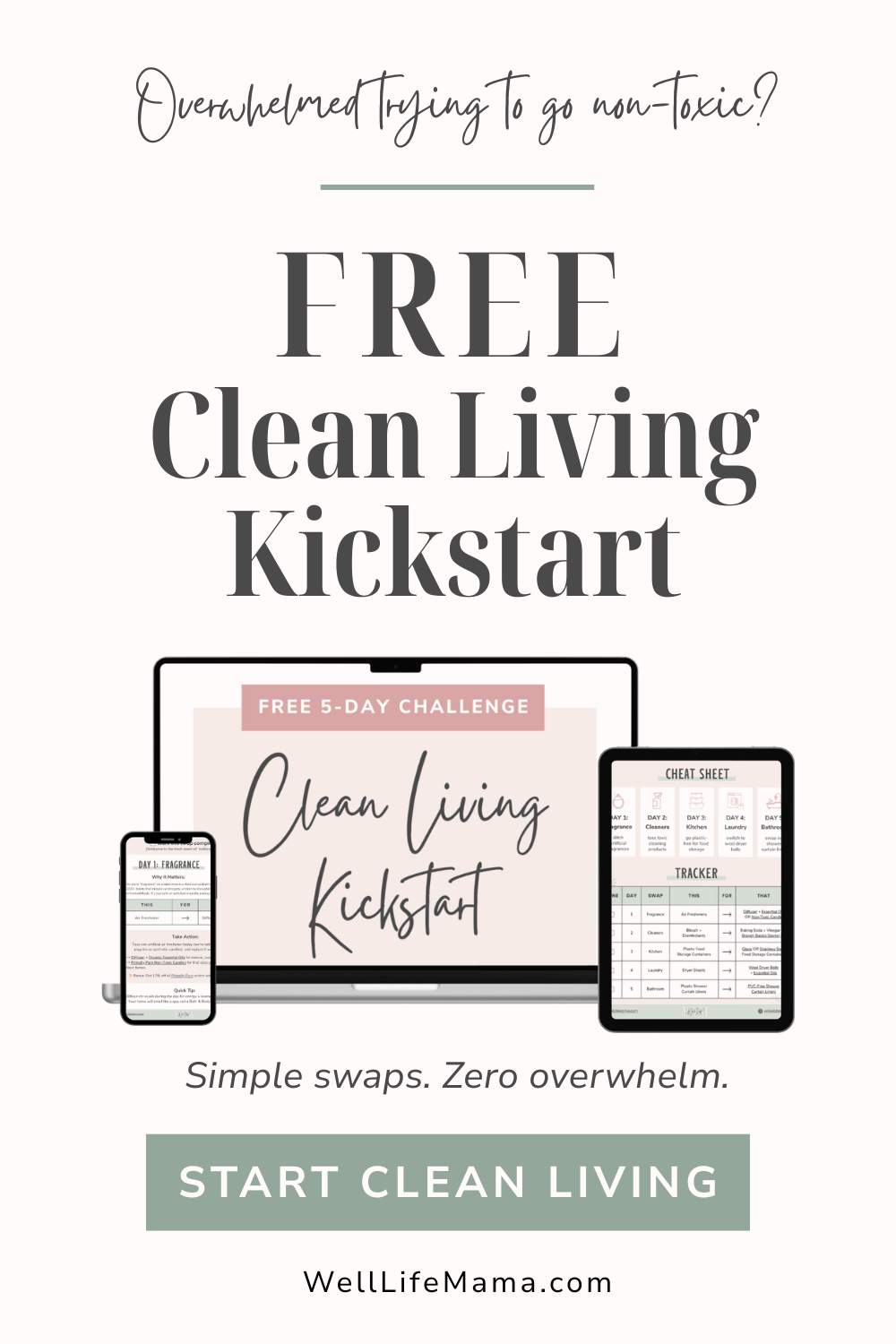
If you’re ready to reduce toxins without a complete home overhaul, the Free 5-Day Clean Living Kickstart is your shortcut.
Over 5 days, you’ll get:
- One simple, high-impact swap per day
- No intense research, expensive upgrades, or panic-purging your life
- A practical roadmap for creating a healthier home—one small step at a time
Think of it as your crunchy BFF-approved guide for clean living made easy.
👉 Download the free 5-Day Clean Living Kickstart and start working towards a low-tox lifestyle, minus the overwhelm.
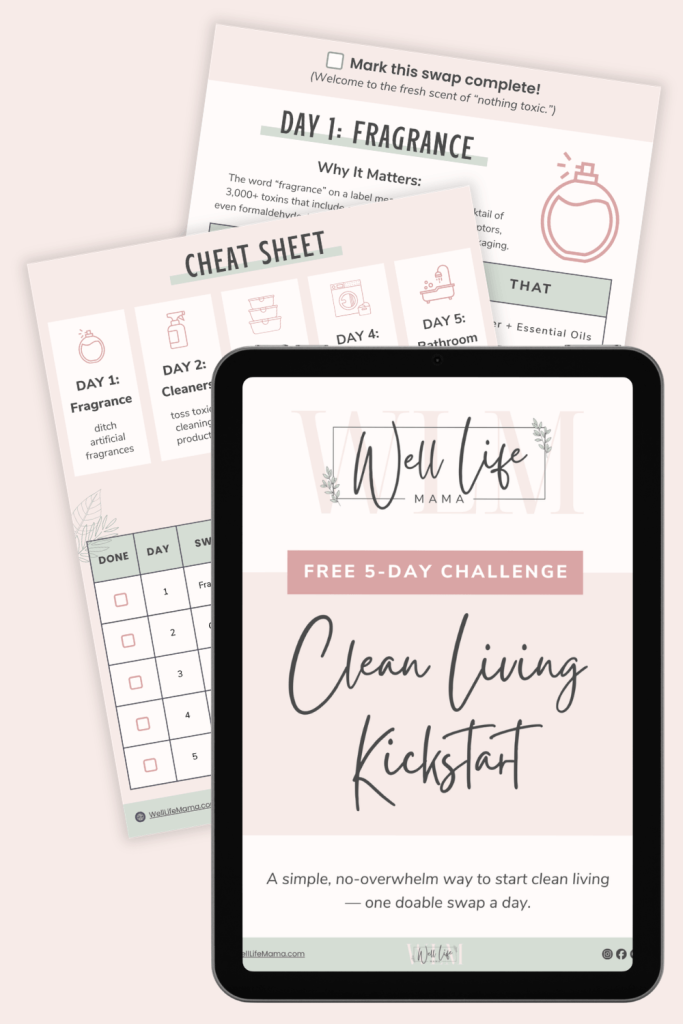
5 Days to a Cleaner, Low-Tox Home (Without the Overwhelm)
You don’t need to replace everything you own or go down an ingredient-research rabbit hole to start living cleaner.
This FREE 5-Day Clean Living Kickstart walks you through one simple swap a day—the kind that actually fits into real life (yes, even mama life).
No overwhelm. No perfection required. Just progress you can feel good about.




0 Comments