
Your daily routine is full of personal care products: face wash, moisturizer, deodorant, makeup… and more. But here’s the thing—many of these everyday staples are quietly packed with toxins that can affect your hormones, skin, and overall health. 😬
That’s where these non-toxic personal care swaps come in. From skincare and makeup to body care and feminine products, these are the high-impact swaps that actually matter.
These are things you use every day all over your skin, in your mouth, and even in your body, so they can make a real difference when you go low-tox.
No overwhelm, no guilt, just practical swaps to upgrade your routine and feel good doing it.
Ready to swap your personal care products smarter, not harder? Let’s go. ✨
Medical Disclaimer: This post is for educational purposes only and is not medical advice. I’m not a healthcare professional, and nothing here is a substitute for guidance from your provider. Always consult a qualified professional before making changes to your health, supplements, or lifestyle. Please see the full disclaimer for more details.
Affiliate Disclosure: This post may contain affiliate links or links to Amazon. If you choose to purchase anything through these links, I may earn a commission at no cost to you. As an Amazon Associate, I earn from qualifying purchases. Thank you so much for your support, you’re the best! See the full disclosure for details.
Hidden Toxins in Personal Care Products
The products you use every day—your shampoo, moisturizer, foundation, deodorant, and more—can contain chemicals that quietly mess with your body.
Some are endocrine disruptors, others irritate your skin, and some may even impact long-term health. Knowing what to watch for is the first step in making smarter swaps.
Here are the key culprits hiding in your personal care routine:
Want an Easy Place to Start?
If you’re new to clean living, figuring out which swaps actually matter can feel overwhelming.
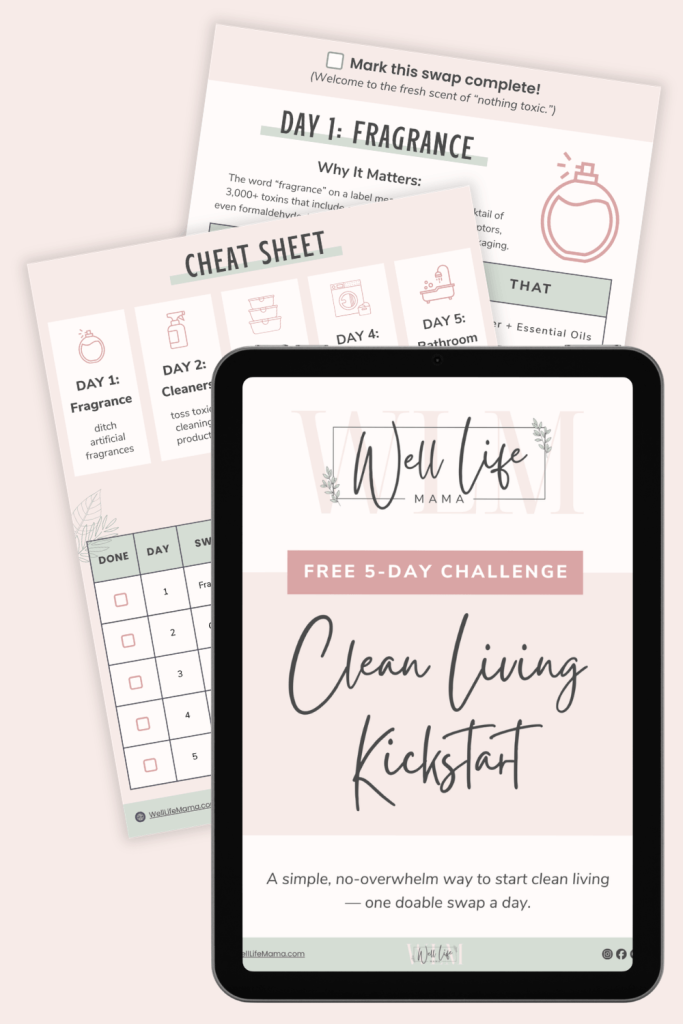
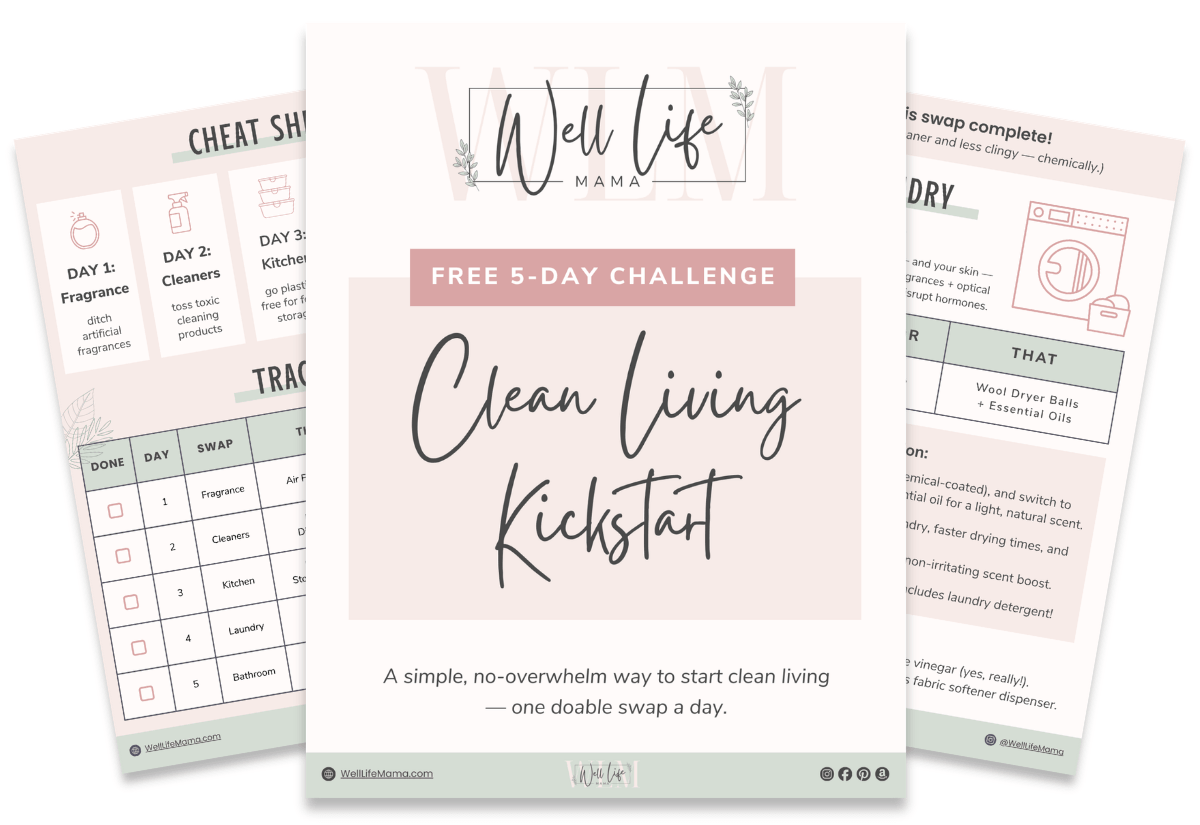
That’s why I created a free 5-Day Clean Living Kickstart that walks you through 5 simple swaps to reduce toxins in your home without hours of research.
✔ quick wins
✔ beginner-friendly swaps
✔ no overwhelm
Parabens (Preservatives)
Parabens are chemicals used to keep personal care products from growing mold and bacteria.
They can mimic estrogen in the body and disrupt hormone function, which may impact fertility, reproductive health, and overall hormone balance.
Not exactly what you want in products you’re using on your body day in and day out.
Where They Show Up:
- Shampoo & conditioner
- Body wash & lotion
- Foundation & mascara
- Sunscreen
Common names to watch for include methylparaben, propylparaben, butylparaben, and ethylparaben.
If it ends in “-paraben,” that’s your sign to put it back on the shelf.
Phthalates & Fragrance
“Fragrance” might sound harmless, but it can actually be a catch-all term for dozens (or even hundreds) of undisclosed chemicals, including phthalates.
Phthalates are chemicals used to make fragrances last longer. They also help products stick and spread more easily.
Seems helpful, right? But they can interfere with hormone function, impact fertility, and affect reproductive developmentso they’re not something to shrug off.
Where They Show Up:
- Perfume
- Deodorant
- Body wash & lotion
- Shampoo & conditioner
- Hair products & styling sprays
- Makeup & lip products
If you see “fragrance” or “parfum,” it can be hiding a whole cocktail of chemicals behind the scenes.
Not exactly the mystery ingredient you want in your daily routine.
👉 You may also like: 5 Easy Ways to Start Reducing Your Toxin Build Up
SLS & SLES (Foaming Agents)
Sodium lauryl sulfate (SLS) and sodium laureth sulfate (SLES) are foaming agents that create that rich, bubbly lather we’re so accustomed to.
They’re known to cause skin irritation and inflammation, and when used in products like toothpaste, they can irritate the mouth and oral tissues.
Even more concerning, they may be contaminated during manufacturing with byproducts like ethylene oxide and 1,4-dioxane—both linked to cancer and other serious health concerns, including organ toxicity and reproductive issues.
Where They Show Up:
- Shampoo & conditioner
- Body wash & hand soap
- Toothpaste
All those suds might feel satisfying, but they can come with some not-so-satisfying side effects.
Preservatives (Formaldehyde Releasers)
These are chemicals that slowly release formaldehyde to prevent bacteria growth.
They’re linked to skin irritation and allergies, and formaldehyde is a known carcinogen—so not something you want in your everyday routine.
Where They Show Up:
- Shampoo & conditioner
- Body wash & lotion
- Nail products (bonus: we’re skipping nail polish here)
- Some makeup & hair treatments
Even “gentle” products can hide these sneaky preservatives behind long chemical names.
Common names to watch for include DMDM hydantoin, quaternium-15, imidazolidinyl urea, and diazolidinyl urea.
The label may not list “formaldehyde”—but your body will still know it’s there.

Synthetic Colors (Artificial Dyes)
Synthetic colors are often derived from petroleum to give your products those bright, sparkly and pretty shades.
They can irritate skin and cause allergic reactions. Some are also linked to hormone disruption and may contain or be contaminated with compounds that have genotoxic or carcinogenic properties — a bit much for this season’s color palette.
Where They Show Up:
- Lip products (gloss, lipstick)
- Blush, bronzer, eyeshadow
- Foundation with added tints
Look for names like FD&C or D&C followed by a color and number.
Just because it looks pretty in the tube doesn’t mean the ingredients are pretty.
How to Choose Non-Toxic Personal Care Products
Switching to non-toxic products doesn’t mean you need to toss everything you own and start fresh—unless you want to turn this into a full-on bathroom reset moment. 😉
The goal is to make smarter choices over time, focusing on the products you use every day and the ingredients that actually matter.
Here’s how to keep it simple:
1. Start with What You Use Daily
Not all swaps are created equal. Focus on the products you’re using every single day—like body wash, deodorant, face moisturizer, and lip products.
These are the ones that add up quickly with repeated exposure, so upgrading them first gives you the biggest impact without the overwhelm.
👉 You may also like: 21 Clean Living Benefits You’ll Actually Notice in Real Life
2. Flip the Label (Don’t Just Trust the Front)
“Natural,” “clean,” and “non-toxic” aren’t regulated terms—so brands can use them pretty freely.
Instead, flip the bottle and check the ingredient list. If you spot anything ending in “-paraben,” the word “fragrance” (or “perfume” or “parfum”), or long chemical names you can’t pronounce, walk away.
And if you want help decoding labels without spiraling in the aisle, I created a Greenwashing Decoder bonus that breaks it all down for you.
You’ll find all the details on how to get it inside the free 5-Day Clean Living Kickstart.
3. Watch for Hidden Fragrance
Fragrance is one of the sneakiest sources of toxins in personal care products.
Even if something smells amazing, it’s time to break up with artificial “fragrance.” 💔 It’s just not worth the secret mix of chemicals—including phthalates—hiding behind that one word.
When possible, look for:
- “Fragrance-free” (not just “unscented”—companies can still use masking fragrances to cover up smells. Sneaky, right?)
- Products scented with essential oils (if you like them and your skin agrees)
4. Look for Shorter, Simpler Ingredient Lists
You don’t need a chemistry degree to spot a better product—but simpler ingredient lists make it a whole lot easier.
In general, fewer ingredients = fewer chances for hidden fillers, synthetic additives, and unnecessary toxins.
5. Don’t Fall for “Perfect”
You don’t need to swap everything overnight or find the “perfect” product to get started.
Clean living is about progress, not perfection—and small, consistent swaps will always beat doing nothing because it feels overwhelming.
6. Swap as You Run Out
One of the easiest ways to transition to a low-tox routine is to replace products as you finish them.
No waste, no stress, no blowing your budget in one Target run (we’ve all been tempted 😅).
15 Non-Toxic Personal Care Swaps for a Healthier Home
These swaps focus on some of the biggest sources of hidden toxins in your personal care routine—the products you’re using on your skin, face, and body every single day.
And remember, you don’t need to do all of these at once (but if you suddenly feel the urge to upgrade your entire bathroom… I get it 😉).
Small non-toxic personal care swaps over time add up—and your skin, hormones, and overall health will feel the difference.
1. Hand Soap → Non-Toxic Hand Soap
Hand soap is one of the most used products in your entire routine—and one of the easiest places for hidden toxins to sneak in.
Between frequent hand washing (because mystery messes are basically a lifestyle) and ingredients like synthetic fragrance, harsh sulfates, and antibacterial chemicals, it adds up fast.
And since you’re using it multiple times a day, what’s in your soap actually matters more than you might think.
What to use instead:
- Dr. Bronner’s Organic Sugar Soap
- Branch Basics Foaming Wash (← get $10 off your first order with my link)
- ATTITUDE Hand Soap (unscented version)
- Dr. Bronner’s Pure-Castile Bar Soap
Look for non-toxic hand soap options that are fragrance-free or naturally scented with essential oils and made with plant-based ingredients. Skip anything labeled “antibacterial” unless you truly need it. Regular soap does the job just fine.
Because if you’re washing your hands all day, you might as well make it count. 🧼✨
2. Body Wash → Non-Toxic Body Wash or Bar Soap
Body wash might seem harmless, but it’s covering your entire body—daily. And many conventional formulas are packed with synthetic fragrance, sulfates, and preservatives that can irritate your skin and add to your overall toxin exposure over time.
Plus, when you’re using it in a hot shower (hello, open pores), your skin is even more absorbent. Not exactly the ideal time for questionable ingredients.
What to use instead:
- Primally Pure Body Wash (use code “WLM” for 10% off every order)
- Dr. Bronner’s Organic Sugar Soap
- ATTITUDE Body Wash (unscented version)
- Dr. Bronner’s Pure-Castile Bar Soap
Because if it’s going on your entire body every single day, it should probably be doing you a favor—not working against you. 🚿✨
👉 You may also like: How To Make Whipped Tallow Balm – Stupid Easy Recipe!
3. Shampoo & Conditioner → Non-Toxic Hair Care
Your shampoo and conditioner don’t just clean your hair—they sit on your scalp, absorb into your skin, and run down your body every single time you shower.
And your scalp? It’s skin too—which means what you’re using up there still matters just as much as what you put on your face or body.
Many standard formulas contain SLS/SLES, parabens, or formaldehyde-releasing preservatives. So if you’ve ever dealt with dryness, buildup, or a constantly irritated scalp, your hair products might be the problem.
What to use instead:
- Avalon Organics
- 100% PURE (I would just avoid some of their Glossy Locks product line that contains “Natural Fragrance.”)
- Carina Organics
- ATTITUDE shampoos + conditioners (they’re EWG Verified®, but I would avoid the scented ones and go with unscented)
- EWG Verified® shampoos + conditioners
Don’t be surprised if your hair needs a little transition period when you switch to non-toxic hair products. That’s normal, and it should balance out pretty quickly.
Because your hair care routine should leave your hair feeling clean and healthy—not like it needs a detox from your detox. 💁♀️✨
4. Body Lotion → Non-Toxic Body Lotion or Body Oil
Body lotion might seem like a small step in your routine. But when you’re applying it to your entire body on the daily, it adds up quickly.
And unlike wash-off products, lotion just sits there—soaking into your skin and sticking around for hours.
Many conventional lotions contain synthetic fragrance, parabens, and petroleum-based ingredients that can disrupt hormones, irritate sensitive skin, or create that “soft” feeling by coating your skin instead of actually nourishing it.
What to use instead:
- DIY Whipped Tallow Balm
- Primally Pure Body Butters (use code “WLM” for 10% off every order)
- Primally Pure Body Oils (use code “WLM” for 10% off every order)
- ATTITUDE Body Lotion for Sensitive Skin (unscented version)
Look for non-toxic body lotions or oils that hydrate your skin and support it—not just ones that sit on top and call it a day.
Because if you’re moisturizing your entire body, it should actually be doing something beneficial. 🧴✨
5 Easy Swaps To Start Clean Living
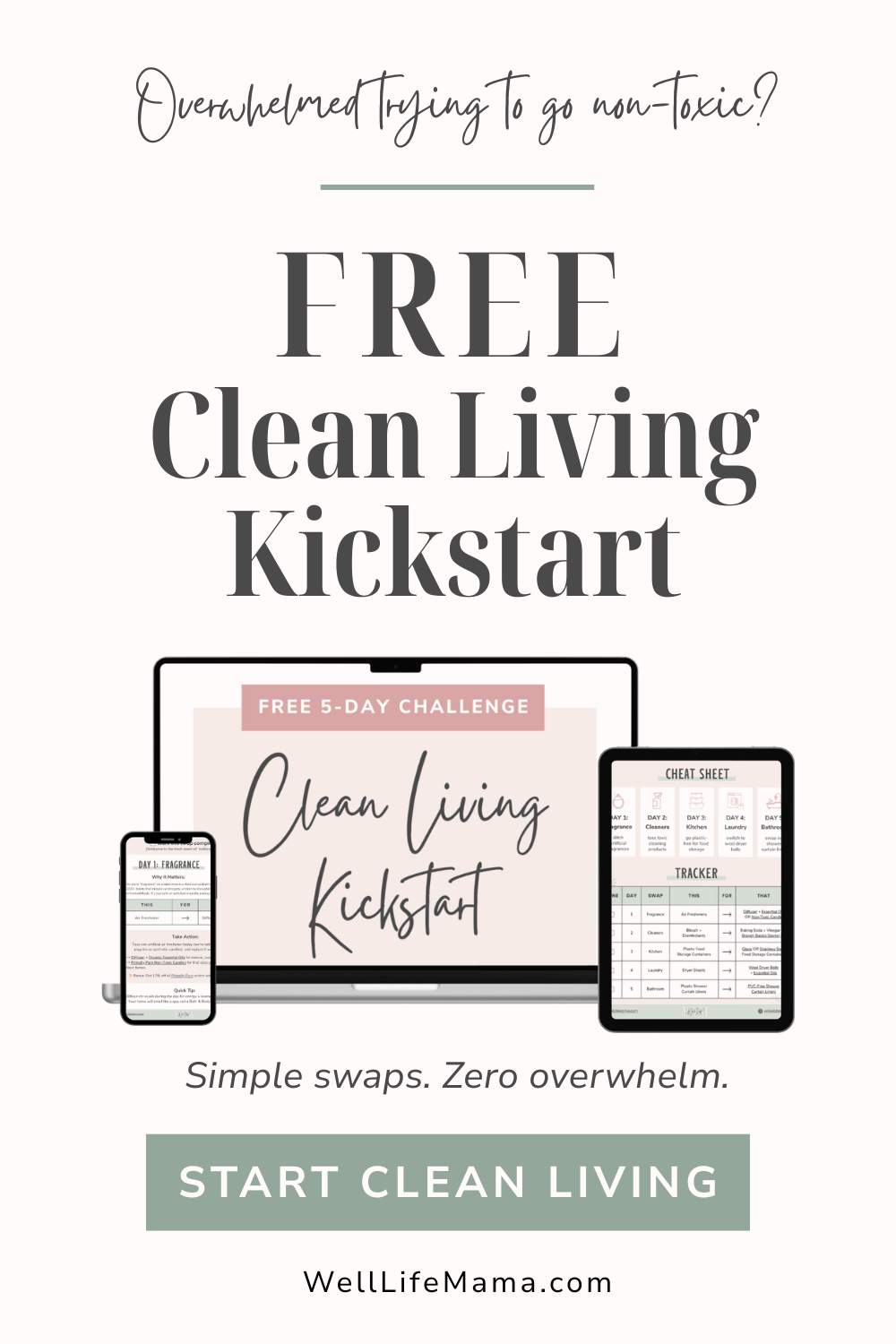
Overwhelmed by labels, toxins, and where to even begin? This FREE 5-Day Clean Living Kickstart shows you how to start clean living with simple swaps—no extremes, no stress, no pressure to be perfect.
5. Face Wash → Natural Oil Cleanser
Your face wash is probably one of the first (and last) products your skin sees every single day — so if it’s too harsh or full of questionable ingredients, your face is the one paying for it.
Many face cleansers rely on SLS/SLES, synthetic fragrance, and harsh preservatives like parabens or formaldehyde releasers — ingredients that can strip your skin barrier, disrupt your microbiome, and add to your overall toxin exposure over time.
If your skin constantly feels like it’s overreacting, breaking out, or stuck in a cycle of oily and dry, your cleanser might be part of the problem.
What to use instead:
- Primally Pure Cleansers — the Cleansing Oil is my ride or die! (use code “WLM” for 10% off every order)
Look for formulas that support your skin barrier instead of constantly stripping it — your skin should feel balanced.
Because “squeaky clean” isn’t the goal — that’s your skin asking for help. 🫠✨
6. Facial Moisturizer → Non-Toxic Moisturizer or Face Oil
Face moisturizer is one of those products you’re probably using every single day, twice a day. So the ingredients in it are getting a lot of face time (pun fully intended 😉).
Many moisturizers contain synthetic fragrance, parabens, and petroleum-based ingredients that can do more than just sit on your skin. These ingredients have been linked to hormone imbalances, reproductive health concerns, and even increased cancer risk.
So if your skin still feels dry five minutes later… yeah, it might not be doing what it claims. Some moisturizers create the illusion of hydration by coating your skin instead of actually nourishing it
What to use instead:
- Primally Pure Balms + Creams (use code “WLM” for 10% off every order)
- Toups & Co Moisturizers (get 25% off with my code: NDU)
- DIY Whipped Tallow Balm
- BeeFriendly Organic Face & Eye Cream or Organic Night Cream
Look for a non-toxic face moisturizer that supports your skin barrier and actually hydrates.
Because your moisturizer should work with your skin, not just sit there vibing on your face. 😌✨
7. Sunscreen → Natural Mineral Sunscreen
Sunscreen is an important product in your routine. But not all sunscreens are created equal.
Many traditional sunscreens use chemical UV filters like oxybenzone and octinoxate, which don’t just block UV rays—they’re absorbed into the body and can cause skin irritation, interfere with hormone function, and impact reproductive health over time.
And if you’re applying (and reapplying) it regularly, that exposure adds up quickly.
What to use instead:
- Badger Mineral Sunscreens
- Primally Pure Tallow-Based Sunscreens (use code “WLM” for 10% off every order)
Mineral sunscreens with zinc oxide or titanium dioxide create a physical barrier on your skin, blocking UV rays without being absorbed into your body—making them a more stable and skin-friendly option.
Yes, they can sometimes leave a slight white cast. But newer formulas have come a long way (promise).
Because getting some sun is great… but you still want to be smart about what you’re putting on your skin. ☀️✨
👉 You may also like: 15 Ways to Save Money on Non-Toxic Items for Healthy Clean Living
8. Antiperspirant → Non-Toxic Deodorant
Antiperspirant is something you’re applying daily—right to your underarms, where your skin is sensitive and your lymph nodes are close by. So what’s in it matters more than most people realize.
Most antiperspirants rely on aluminum compounds to block your sweat glands and stop you from sweating altogether. But sweating is one of your body’s natural ways to regulate temperature and eliminate waste—so shutting that process down isn’t exactly doing your body any favors.
And let’s be honest—regularly swiping aluminum (a heavy metal) onto your skin isn’t ideal, especially when it’s been linked to neurological concerns and is being studied for its potential role in long-term health issues, including breast cancer.
On top of that, many formulas also contain synthetic fragrance and preservatives, which can add to your overall toxin exposure over time.
What to use instead:
- Primally Pure Deodorant (use code “WLM” for 10% off every order)
- Toups & Co Deodorant (use code “NDU” for 25% off)
🌿 Heads-up: when you first make the switch to non-toxic deodorant, your body may go through an adjustment period as it gets used to sweating regularly again. Totally normal—it usually balances out fairly quickly.
Because your body is supposed to sweat… just maybe not smell like a middle school locker room. 😅✨
9. Tampons & Pads → Non-Toxic Feminine Care
Your period is already enough of a rollercoaster—no need to add hidden chemicals into the mix. Standard tampons and pads typically contain plastic-based synthetic fibers, dyes, fragrances, and sometimes pesticide residues from conventionally grown cotton.
Many are also bleached with chlorine, leaving behind trace dioxins, which are carcinogenic and may accumulate in the body over time. These compounds can affect hormone function, irritate sensitive tissue, and contribute to long-term health concerns.
What to use instead:
- 100% organic cotton tampons, pads or thong liners
- 100% Medical Grade Silicone Reusable Menstrual Cup (if you’re ready to take the plunge)
🌿 Crunchy Tip: Reducing your overall exposure to endocrine-disrupting chemicals (EDCs) can help balance your hormones, which may lead to fewer period cramps, lighter PMS symptoms, and more consistent cycles.
Because your period deserves clean, not complicated. 🌿💛
10. Plastic Toothbrush → Plant-Based Toothbrush
Your toothbrush goes in your mouth twice a day (hopefully 😅), so it’s worth paying attention to what it’s made of.
Conventional toothbrushes are made from plastic—including the bristles—which can wear down over time and leave microplastics in your mouth. Not exactly what you’re going for in your oral care routine.
What to use instead:
- Bamboo toothbrushes with plant-based bristles (your safest option)
- toothbrushes labeled “biodegradable” or “compostable”
🌿 Crunchy Tip: Even most bamboo toothbrushes still use nylon bristles, so check if the bristles are plant-based.
Because brushing your teeth is supposed to remove food particles—not add plastic particles. 🪥✨

11. Conventional Toothpaste → Non-Toxic Toothpaste
Toothpaste is something you ingest a little of every day—whether you mean to swallow it or not. So it’s worth taking a closer look at what’s in it.
Many standard toothpastes contain fluoride, SLS (sodium lauryl sulfate), artificial sweeteners, and synthetic colors.
Fluoride in particular is a controversial ingredient—it’s a neurotoxin and bioaccumulative compound that has been linked to thyroid dysfunction, neurological concerns, and potential impacts on cognitive development and reproductive health when exposure adds up over time.
SLS can also irritate the mouth and gums. And those bright colors and sweet flavors? They’re not doing your health any favors either.
What to use instead:
- Dr. Bronner’s All-One Toothpaste (note: does not foam but leaves mouth feeling clean and fresh)
- Himalaya Botanique Whitening Complete Care Toothpaste
- Himalaya Botanique Whitening+ Hydroxyapatite Toothpaste
You’ll often see xylitol in natural toothpastes because it helps reduce cavity-causing bacteria and supports a healthier oral environment.
That said, some recent research has linked high levels of xylitol consumption to an increased risk of cardiovascular events like heart attacks and strokes—so it’s something to be aware of as you’re choosing products.
Because brushing your teeth should support your health—not come with a list of trade-offs. 😬✨
12. Foundation + Concealer → Non-Toxic Base Makeup
Your face is basically a sponge for whatever you put on it every day. Most foundations and concealers include synthetic dyes, preservatives like parabens, silicones, and sometimes even fragrance, all of which can expose you to toxins linked to hormone disruption, reproductive health risks, and long-term toxicity.
Some formulas also include chemical UV filters or mica ingredients that may be contaminated with trace heavy metals, especially in shimmery or SPF-infused products—another reason to read that label.
What to use instead:
- Primally Pure Sun Serum Tinted SPF 30 (use code “WLM” for 10% off every order)
- Well People Tinted Moisturizer or Complexion Stick or Concealer
- Toups & Co Complexion products (use code “NDU“ for 25% off)
A simpler, non-toxic foundation + concealer can give you coverage without overloading your skin with unnecessary chemicals.
Because flawless coverage shouldn’t require hidden extras. ✨
13. Eye Makeup (Mascara + Eyeshadow) → Non-Toxic Eye Makeup
Mascara and eyeshadow go right next to your eyes—one of the most sensitive areas of your body. And with blinking, watering, and normal wear throughout the day, it’s not uncommon for small amounts to make their way into your eyes or tear ducts.
Many typical formulas contain carbon black (used for pigment), synthetic dyes, and preservatives, which can irritate the eyes and expose you to compounds linked to hormone disruption, allergic reactions, and other long-term health concerns.
Carbon black in particular has raised concerns due to potential contamination with heavy metals and its classification as a possible carcinogen.
So if your eyes ever feel itchy, watery, or just off… your makeup could be the main offender.
What to use instead:
- Honest Beauty 2-in-1 Extreme Length Clean Mascara + Lash Primer
- Well People Mascara – Lengthening, Curling, Volumizing or Pro
- Toups & Co Natural Eye Makeup Palette or Eyeshadow Singles (get 25% off with my code: NDU)
Look for non-toxic eye makeup formulas made with iron oxides or natural mineral pigments instead of carbon black—your eye area isn’t the place to experiment with questionable ingredients.
Because “beauty is pain” shouldn’t apply to your eyeballs. 👀✨
👉 You may also like: GIFT GUIDE: The Best Non-Toxic Wellness Gifts for Health Junkies They’ll Actually Want
14. Blush & Bronzer → Non-Toxic Face Makeup
Blush and bronzer might get overlooked—but they’re sitting on your skin for hours at a time. And since your skin absorbs what you put on it, those ingredients matter.
Many formulas are made with synthetic dyes (often petroleum-derived), preservatives, and sometimes added fragrance, which can expose you to compounds linked to hormone disruption and long-term health concerns like organ toxicity and carcinogenic effects.
And because these products are applied to your cheeks (hello, larger surface area), it’s not exactly a small exposure.
What to use instead:
- Primally Pure Lip + Cheek Tint SPF 15 (use code “WLM” for 10% off every order)
- Well People Bronzing Powder, Stick Bronzer or Stick Blush
- Toups & Co Cheek products (use code “NDU” for 25% off)
Powder, cream, or liquid—it doesn’t matter. What matters is what’s actually in it. Look for products colored with natural minerals instead of synthetic dyes.
Because that healthy glow shouldn’t come with a side of questionable ingredients. ✨
15. Lip Products (Lip Color + Balm) → Non-Toxic Lip Products
Lip products might seem low on the priority list—but they’re one of the easiest ways to get unwanted chemicals into your body.
Why? Because whatever you put on your lips doesn’t just stay there… it gets absorbed, eaten, and reapplied all day long. 😅
Lip products typically contain synthetic fragrance, artificial dyes, and petroleum-based ingredients, which may be contaminated with compounds linked to hormone interference, organ toxicity, and even cancer.
So that “just a little swipe” throughout the day? It adds up.
What to use instead:
- Primally Pure Lip + Cheek Tint SPF 15 (use code “WLM” for 10% off every order)
- Primally Pure Lip Care products (use code “WLM” for 10% off every order)
- Just a heads-up, the Lip Oils contain stevia, which I don’t recommend during preconception or pregnancy since the steviol glycosides in stevia may have steroid-like activity and could influence hormone signaling.
- Toups & Co Organic Lip products (use code “NDU” for 25% off )
- Dr. Bronner’s Organic Lip Balm
- Badger Organic Lip Balm
Look for natural lip products that nourish your lips while keeping ingredients clean—because this is one product you’re definitely not just wearing.
If it’s going on your lips… you’re basically taste-testing it all day. 💄✨
Want a shortcut?
I put together my favorite non-toxic personal care products over on my Amazon storefront—everything from shampoo and deodorant to toothpaste and everyday basics that make switching way easier.
👉 Shop my Amazon Personal Care Picks here
How to Start a Low-Tox Personal Care Routine (Without Ditching Your Entire Vanity)
Going low-tox doesn’t have to mean tossing everything in your bathroom and starting over with a new non-toxic self-care routine.
In fact, small, high-impact swaps add up faster than you think. Here’s how to ease into low-tox personal care swaps without panic-purging your bathroom stash:
- Start with your high-use products. Focus on the items you use most every day—hand soap, shampoo, deodorant, lotion. Swapping these first gives the biggest impact for your low-tox personal care routine.
- Take it one shelf or drawer at a time. You don’t need to overhaul your whole bathroom at once. Gradually rotating in clean beauty products keeps things manageable and helps you figure out what actually works for your skin, hair, and lifestyle.
- Test each new product individually. This way, you can see how your skin and hair respond and avoid any surprises when switching to non-toxic personal care products.
- Read labels like a pro. Keep an eye out for parabens, sulfates, synthetic fragrance, and other hidden toxins we covered in the swaps section. The more familiar you are with ingredients, the easier it is to confidently build your low-tox personal care routine.
- Keep a swap tracker. Jot down what’s working, what’s not, and your favorite safe personal care products so you can build a trusted, go-to lineup over time.
Remember: progress beats perfection. A few thoughtful changes now will add up to big wins for your health, your hormones, and your pace of mind.
Get 10% OFF every Primally Pure order with discount code “WLM” (save this code – it can be used every time you order)!
Want an Easy Place to Start?
If you’re new to clean living, the hardest part is usually figuring out which non-toxic swaps actually matter most.
That’s exactly why I created the Free 5-Day Clean Living Kickstart.
It walks you through five simple swaps that significantly reduce toxins in your home—without overwhelm or expensive upgrades.
Each day focuses on one quick change you can make in just a few minutes.
Grab it here 👉 5-Day Clean Living Kickstart
Continue Building Your Low-Tox Home
These are some major upgrades for your non-toxic personal care routine. High-five for giving your daily products a healthier glow! 👏
But your toxin-free journey doesn’t have to stop here. Want to keep the low-tox party going? Here are some other areas to level up your clean living game:
- Kitchen Non-Toxic Swaps
- Pantry Non-Toxic Swaps
- Home Non-Toxic Swaps
- Pregnancy Non-Toxic Swaps
- Baby Non-Toxic Swaps
- Toddler Non-Toxic Swaps
Want the full roadmap to bring it all together? Start here:
Non-Toxic Swaps: How to Replace Toxic Items and Start Clean Living (Beginner Guide)
It’s your guide to replacing the sneaky toxins hiding all over your home—without the overwhelm.
👉 You may also like: My Journey to a Healthy Rainbow Baby: How I Healed My Body After Multiple Miscarriages + Got Pregnant Naturally
FAQ: Personal Care Non-Toxic Swaps
Still have questions about non-toxic personal care swaps or building a low-tox routine? Here are answers to some of the most common questions about choosing safer personal care products and reducing everyday chemical exposure.
Do I need to switch all my personal care products at once?
Nope! Baby steps are totally fine. Start with the high-impact swaps—like body wash, lotion, and deodorant—and gradually upgrade the rest. Your body (and your sanity) will thank you 😉.
Can “natural” or “green” products still have hidden toxins?
Afraid so. Labels like “green,” “natural,” or “free & clear” aren’t regulated, so check the ingredient list. Fragrance, parabens, and sulfates can still sneak in.
🌿 Crunchy Tip: grab my Greenwashing Decoder in the free 5-Day Clean Living Kickstart for all the details.
Is non-toxic makeup as good as conventional brands?
Totally! Non-toxic makeup can have amazing coverage and color payoff — without all the sneaky chemicals. You might need to experiment a bit to find your new fave formulas (like you did to find your last faves), but it’s worth it. Bonus: no more worrying about your makeup products secretly tagging along in your system.
Are mineral sunscreens really safer than chemical sunscreens?
Yes! Mineral sunscreens with zinc oxide or titanium dioxide reduce long-term exposure to hormone-disrupting chemicals. That’s because they sit on top of your skin and physically block UV rays instead of being absorbed into your body like oxybenzone and octinoxate.
Can switching to non-toxic personal care actually improve my health?
Absolutely! Reducing exposure to endocrine-disrupting chemicals, heavy metals, and petrochemicals can support hormone balance, skin health, and even lower the load on your liver and other detox systems. It’s a small change with big benefits over time.
Final Thoughts on Creating a Low-Tox Personal Care Routine
Your personal care products don’t need to be perfect to be healthier. Start small—even one swap at a time makes a difference.
Maybe you switch to a natural deodorant.
Swap out that conventional shampoo & conditioner.
Upgrade your go-to foundation for a cleaner option.
Over time, these little changes add up to a personal care routine that’s safer, simpler, and actually supports your health instead of sneaking in hidden chemicals.
And the best part?
Even a handful of non-toxic personal care swaps can make a noticeable difference—for your hormones, your body, your skin, and your peace of mind.
Progress over perfection.

Ready to Kickstart Your Clean Living Journey?
If you’re ready to reduce toxins without a complete home overhaul, the Free 5-Day Clean Living Kickstart is your shortcut.
Over 5 days, you’ll get:
- One simple, high-impact swap per day
- No intense research, expensive upgrades, or panic-purging your life
- A practical roadmap for creating a healthier home—one small step at a time
Think of it as your crunchy BFF-approved guide for clean living made easy.
👉 Download the free 5-Day Clean Living Kickstart and start working towards a low-tox lifestyle, minus the overwhelm.
5 Days to a Cleaner, Low-Tox Home (Without the Overwhelm)
You don’t need to replace everything you own or go down an ingredient-research rabbit hole to start living cleaner.
This FREE 5-Day Clean Living Kickstart walks you through one simple swap a day—the kind that actually fits into real life (yes, even mama life).
No overwhelm. No perfection required. Just progress you can feel good about.






0 Comments